
Attic Mold: How to Tell if It Is Serious and What to Do Next
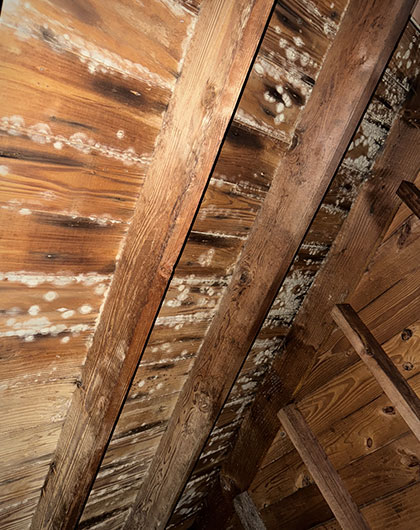
Most people find out about mold in attic spaces by accident: a quick trip for storage, a home inspection report, or a roofer photo. Once you see dark staining or fuzzy patches overhead, the real question is simple: Is this a minor issue I can keep an eye on for now, or a problem that needs professional mold removal ASAP?
In this guide, we explain how to recognize signs of mold in attic spaces, how to think about risk, what limited DIY steps may be reasonable, and when attic mold removal from a qualified company like FDP Mold Remediation makes sense.
Why Does Attic Mold Show Up?
Attic mold usually appears as a growth on wood, insulation, or other attic materials that can develop when moisture and limited airflow allow spores to settle and grow. Spores are common in indoor and outdoor air, so the presence of spores alone is not an issue. The problem usually starts when surfaces stay damp long enough for growth to take hold.
In most homes, attic mold tends to trace back to one of a few patterns:
- Roof leak: Even a small leak around shingles, flashing, or a roof penetration can dampen sheathing or insulation. When wetting repeats over time, staining and growth can show up in consistent lines or patches.
- Condensation: Warm indoor air can leak into a colder attic and condense on the underside of the roof deck or around nails and fasteners. This is more common in colder seasons or during sharp temperature swings.
- Ventilation blockage: Soffit, ridge, or gable vents can be partially blocked by insulation, dust, or poor installation. When airflow is restricted, humidity can linger and surfaces can stay damp longer than they should.
- Improper exhaust termination: Bathroom fans, kitchen vents, or dryer vents that end in the attic can dump warm, moist air directly into the space. That moisture can be collected on framing and roof decking, especially in winter.
Not every dark spot in the attic is mold, and not every mold finding is an emergency. The next section gives you a simple way to decide whether monitoring is reasonable, if an inspection is a better next step, or remediation may be appropriate.
Quick Decision Guide: Monitor, Inspect, or Remediate
Use this checklist as a starting point before you decide on DIY mold removal or calling a pro.
Situations that May Be Reasonable to Monitor
You might choose to watch the area and improve ventilation if:
- The discolored area is very small (for example, smaller than a sheet of paper)
- There is no known active leak or ongoing moisture source
- The staining has not changed over several months
- No one in the home has known sensitivities to indoor environmental triggers
When to Get a Professional Inspection
It is usually sensible to schedule an inspection if:
- The affected area is larger than about 10 square feet
- You see mold-like growth on multiple rafters or roof sheathing panels
- There has been a recent roof leak, ice dam, or storm damage
- You notice a persistent musty odor from the upper floors or the attic
- You are in the process of selling or buying the home
When to Consider Full Attic Mold Remediation
Calling for mold removal may be appropriate if:
- Growth is widespread across large sections of wood or insulation
- Mold is present near or on ductwork, air handlers, or other HVAC components
- Materials appear damp or soft, suggesting ongoing moisture problems
- Previous cleaning attempts did not resolve the issue
Every property is different, so these are general guidelines, not strict rules. During mold inspections, we base our recommendations on actual site conditions rather than a single checklist.
Call FDP Mold Remediation at 877-421-2614 to schedule an inspection to assess your property.
How to Recognize Signs of Mold in Your Attic
Seeing signs of mold in attic areas early can make solutions simpler and less disruptive.
Visual Signs You Might Notice
Visual changes are often what prompt homeowners to start asking questions. You may notice dark or uneven staining on wood rafters or roof sheathing, especially in areas that stay shaded or appear repeatedly damp. In some cases, growth looks fuzzy or spotty and may appear white, green, brown, or black. Insulation can also show discoloration, particularly near roof penetrations, valleys, or areas where past leaks occurred. When moisture follows a consistent path, mold or staining may appear in clusters or lines that mirror that pattern.
It is important to remember that not all dark staining is mold. Old water marks, dust accumulation, or natural variations in wood color can look similar at a glance. During an inspection, we look beyond color alone and consider surface texture, growth patterns, and moisture readings. When conditions are unclear, and when appropriate, we may recommend third-party testing to help clarify what is present.
Non-Visual Clues That Suggest a Problem
Not all attic mold issues are immediately visible. A persistent musty or stale odor near the attic access or on the upper floor is a common early sign. You might also notice condensation on roofing nails, attic windows, or the underside of the roof deck, especially during colder months. In living spaces below, peeling paint or unexplained discoloration on ceilings can sometimes reflect moisture issues above. In some cases, higher-than-usual energy bills may suggest that insulation has been affected by moisture.
These signs do not prove mold on their own, but they do indicate conditions that may support mold growth and are worth checking sooner rather than later.
Why Mold Keeps Showing Up in Attics
When the attic mold returns after cleaning, the underlying issue is almost always moisture. Without correcting the conditions that allow surfaces to stay damp, even careful cleanup may only provide temporary improvement.
Roof Leaks and Slow Water Intrusion
Small roof leaks are a frequent contributor to attic mold. Problems around flashing, vents, chimneys, or damaged shingles can allow water to enter slowly. Because attics are not often inspected closely, this type of moisture intrusion can continue unnoticed until staining or growth becomes visible.
Condensation From Indoor Air
Condensation is another common cause. Warm indoor air can leak into a colder attic and condense on roof surfaces, particularly during winter or during sharp temperature swings. Over time, repeated condensation can keep wood damp enough to support mold growth even when there is no active roof leak.
Ventilation and Insulation Problems
Ventilation issues often make moisture problems worse. Blocked soffit, ridge, or gable vents can limit airflow and trap humid air in the attic. Over-insulation that covers vents can have the same effect. Exhaust fans from bathrooms, kitchens, or dryers that terminate in the attic instead of outdoors can introduce significant moisture directly into the space, accelerating mold growth.
Climate-Related Patterns
Climate plays an important role in how attic mold develops. In humid regions, attics may stay damp even without obvious leaks, especially when ventilation is poor. In cold or snowy climates, ice dams and heavy snow loads can hold moisture against the roof deck along eaves. In mixed climates, the same attic may experience winter condensation and summer humidity, creating a cycle that supports recurring mold over time.
Understanding which of these factors is affecting your attic helps guide the right response. Addressing moisture sources and airflow issues is often just as important as removing visible mold when the goal is long-term control rather than repeated cleanup.
If you want to go deeper, explore climate-specific prevention strategies and browse our service areas.
How Pros Think About Attic Mold Risk
There is no single standard that labels attic mold as automatically "safe" or "dangerous." Instead of relying on color, labels, or isolated photos, professionals evaluate attic mold by looking at how it interacts with the building and its systems. Risk is assessed in context, not in absolutes.
Key Factors Professionals Evaluate
- When assessing attic mold, professionals focus first on how much growth is present and how concentrated it is. A small, isolated area of staining may be handled very differently from growth that spans multiple framing members or insulation sections.
- Moisture conditions are equally important. Active dampness, elevated moisture readings, or evidence of repeated wetting often matter more than how mold looks on the surface. Mold that formed during a past event but no longer has a moisture source may present a different level of concern than mold supported by ongoing condensation or leaks.
- The location of mold within the attic also affects how it is evaluated. Growth near ductwork, air handlers, or return pathways may raise additional questions because of the potential for air movement between the attic and living spaces. Mold that is limited to an unconditioned attic with no HVAC equipment may be more of a materials or resale concern than an immediate indoor air issue.
- Finally, the condition of the affected building materials plays a role. Mold on structurally sound wood that remains dry may be managed differently than mold associated with soft, deteriorating, or water-damaged materials.
How This Affects Next Steps
Because these factors vary from one property to another, two attics with similar-looking staining can require very different responses. In some cases, monitoring and moisture corrections may be appropriate. In others, targeted or full attic mold remediation may be recommended based on the overall conditions observed.
DIY Attic Mold Removal vs Professional Help
Many homeowners consider DIY mold removal because they want to save money or handle a small problem quickly. In some very limited surface cases, gentle cleaning and improving ventilation can help. It is important to understand, however, where DIY has clear limits. Learn more about the Attic Mold Remediation Cost Factors.
DIY vs Professional Attic Mold Removal
| Aspect | DIY Approach | Professional Mold Removal |
|---|---|---|
| Assessment | Visual only; moisture sources may be guessed | Visual inspection plus moisture measurements; source investigation |
| Safety controls | Basic mask or none; no containment | Respirators, protective clothing, and containment to limit the spread |
| Scope of cleaning | Focus on visible staining | Treats visible and likely hidden areas based on moisture patterns |
| Dealing with moisture | May add fans or open vents without measuring humidity | Drying and humidity control based on measurements and building science |
| Materials decisions | Uncertain about what can be cleaned vs what should be removed | Follows industry standards for cleaning, removal, or sealing |
| Risk of recurrence | It can be higher if the causes are not corrected | May be reduced when both visible growth and contributing conditions are addressed |
For anything beyond that, attic remediation performed by trained mold specialists can help manage risk, protect materials, and deal with the moisture sources in a more systematic way.
How Professional Attic Mold Remediation Works
At FDP Mold Remediation, we follow a structured approach to mold treatment that focuses on both cleanliness and underlying conditions.
1. Inspection and Moisture Investigation
The process begins with a detailed inspection of the attic. We document where visible staining or growth appears and take moisture readings in wood, insulation, and other materials. We also look for signs of roof leaks, condensation patterns, blocked vents, or other moisture pathways, and ask about past leaks, roof work, or indoor humidity issues.
This step shapes the plan, since two attics with similar-looking staining can require very different solutions depending on moisture conditions.
2. Containment and Safety Measures
Before any cleaning or disturbance takes place, containment and safety controls are set up where appropriate. This may include isolating the work area to limit the movement of dust and spores, using air filtration devices with HEPA (High-Efficiency Particulate Air) filters, and wearing appropriate personal protective equipment. These measures are intended to reduce cross-contamination to other areas of the home during work.
3. Surface Cleaning and Material Removal
Cleaning methods are selected based on the condition of the affected materials. This can include HEPA vacuuming to remove loose spores and debris, wiping or brushing surfaces with appropriate cleaning solutions, and, when necessary, controlled removal of materials that are too damaged to be cleaned effectively. Our goal is to follow recognized industry practices, such as those reflected in IICRC (Institute of Inspection Cleaning and Restoration Certification) guidelines, rather than relying on quick cosmetic fixes.
4. Drying and Correction of Contributing Conditions
Effective attic mold remediation is not limited to removing visible growth. Moisture levels in materials are reduced to more typical ranges, and ventilation issues are evaluated. This may involve identifying blocked or restricted vents and recommending corrective actions, as well as suggesting roofing, insulation, or ventilation repairs when needed. When appropriate, we coordinate with or provide guidance for roofers, HVAC contractors, or insulation installers, so changes align with the building's design.
5. Verification and Prevention Guidance
At the end of the project, treated areas are re-inspected, and moisture is checked to confirm improvement. We also provide practical attic prevention guidance. While no indoor environment can be guaranteed to be completely free of mold spores, controlling moisture and following basic maintenance practices can significantly reduce the likelihood of visible growth in the future.
How to Get Rid of Mold in the Attic Safely: Practical Tips
If you are trying to understand how to get rid of mold in attic spaces without making things worse, consider these practical, non-destructive steps first.
Before taking action, document what you see. Take clear photos of the affected areas, including close-ups and wider shots for context, and note when the issue first appeared, along with any recent leaks or weather events.
Avoid disturbing the area. Scraping, sweeping, or aggressively brushing suspected mold can release spores and spread them through the home. Do not run box fans or blowers directly on visible growth.
This information helps a professional inspection to provide a clearer, more accurate plan.
What Happens if You Ignore Attic Mold
Leaving mold in attic spaces unaddressed may have different consequences depending on the situation. Possible outcomes can include:
- Ongoing moisture that weakens wood over time
- Degradation or loss of effectiveness of insulation
- Expansion of mold growth to larger areas of the attic
- Complications during home sale or insurance evaluations
We have seen cases where minor roof issues escalated into larger repair projects because moisture and mold had been present for years before anyone closely inspected the attic.
Contact us to catch and address the problem earlier, keeping options simpler.
Frequently Asked Questions About Attic Mold
Is all the discoloration in my attic mold?
No. Some staining is due to old watermarks, dust, or natural wood characteristics. If the area looks fuzzy, has irregular, spotty patterns, or appears to be spreading, it may be mold.
Is black mold in attic areas always more dangerous?
The term black mold in attic spaces is often used broadly for any dark mold. Color alone does not determine how a mold may affect people or materials.
Can I just paint over attic mold?
Painting or sealing over visible staining may hide the discoloration, but it does not address the underlying growth or the moisture that allowed it to form.
Do I have to replace my roof if there is mold in the attic?
Not always. Some situations can be resolved with targeted attic mold removal, improved ventilation, and minor roof repairs.
Is all attic mold an emergency?
Many attic mold situations are important to address but are not same-day emergencies.
When to Call FDP Mold Remediation
If you suspect mold in attic areas and are unsure how serious it is, you do not have to guess alone. We at FDP Mold Remediation inspect your attic, distinguish staining from active mold, and recommend an appropriate plan for attic mold remediation, scaled to the conditions in your home.
Whether you are preparing for a home sale, responding to a roof leak, or simply want a clearer picture of what is happening overhead, our role is to provide practical information and solutions.
Call us at 877-421-2614 to discuss your situation or schedule a professional assessment for attic mold removal. We are ready to help you understand your options and plan the next steps in a calm, informed manner.