July 2020
updated: 05/20/2026

How to Deal with Summer Mold Season

Summer is when a lot of mold problems seem to show up all at once, but the conditions behind them usually start building earlier. Mold needs moisture, a surface it can grow on, and enough time to stay undisturbed. During the warmer months, those conditions are simply easier to create indoors.

High humidity, condensation on cooler surfaces, heavy AC use, storm-related moisture, and small hidden leaks can all increase the risk. In this guide, we'll walk through why mold issues tend to become more noticeable in summer, where they often begin, how to lower the chances of growth, and when professional help may be worth considering.

How to Deal with Summer Mold Season

Why Mold Problems Tend to Show Up More in Summer

Heat alone does not create mold. Moisture is the real issue. In summer, humid air moves into homes and buildings more easily, and the moisture it brings is not always obvious. Sometimes it collects gradually around vents, ductwork, pipes, window frames, basement walls, or areas with poor insulation. Other times, the source is something smaller, like a minor roof leak, a plumbing drip, or a room that never quite dries after daily use.

That is why summer mold problems can feel sudden even when they are not. A space may seem dry at first glance while moisture lingers behind furniture, inside closets, around HVAC components, or within wall cavities where airflow is limited.

Is Mold Affecting Your Health?
Learn More
Send photos of your mold, get a fast estimate
Attach photos of your mold and we'll be in touch shortly with a pricing estimate.

The Conditions Mold Needs to Grow

A major flood is not required for mold to become a problem. Ongoing dampness is often enough.

Mold typically needs:

  • a moisture source, such as humidity, condensation, a leak, or leftover dampness
  • a surface that can retain moisture, such as drywall, wood, insulation, carpet backing, or fabric
  • slow drying or limited airflow
  • enough time for the area to remain damp

Because of that, mold prevention usually comes down to controlling moisture. When indoor humidity stays elevated, wet materials remain damp, or a small leak keeps feeding the same area, mold has a much better chance to spread.

Where Summer Mold Often Starts Indoors

Some areas are simply more vulnerable during warm weather:

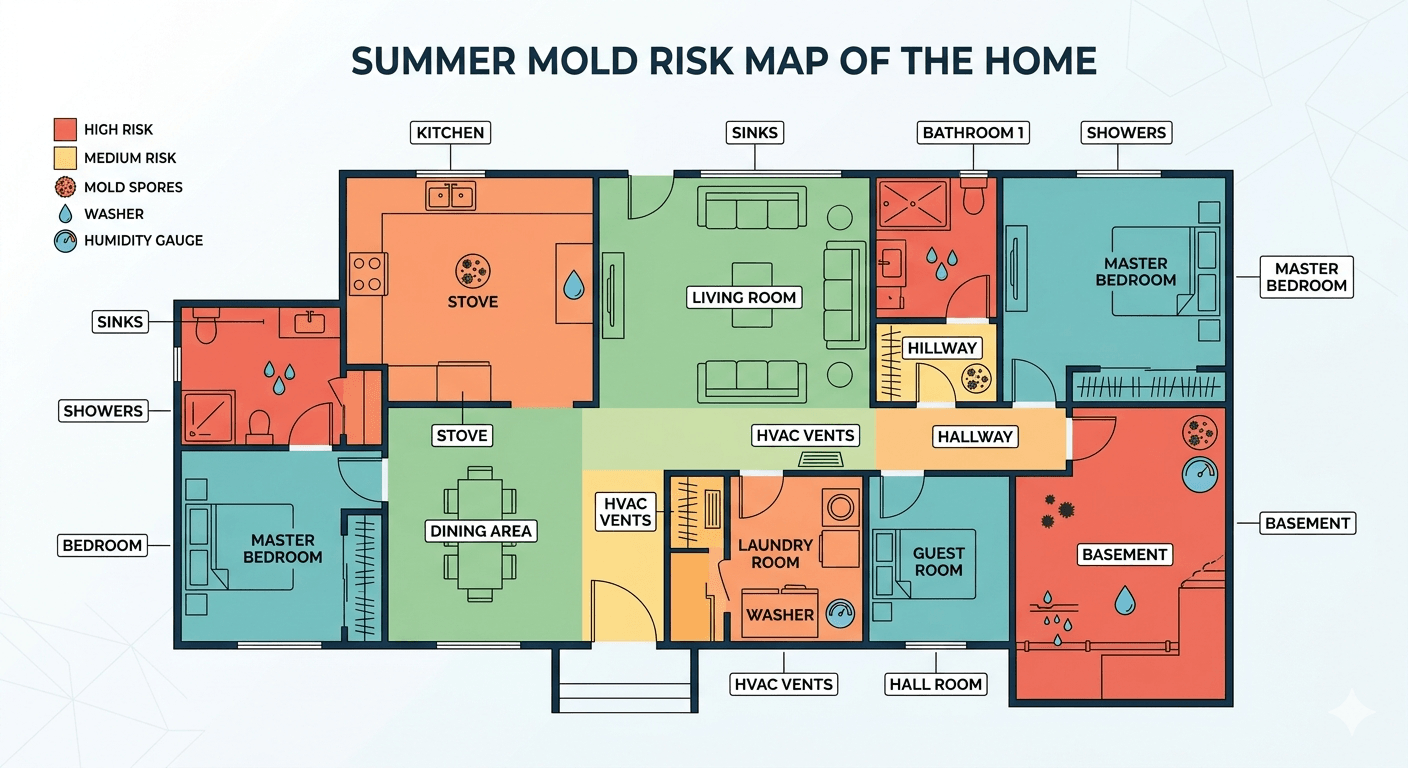
  • Basements and Lower Levels: Basements often have cooler surfaces, weaker airflow, and naturally higher humidity than the rest of the home. Even without standing water, that can create an environment where dampness lingers longer than it should.
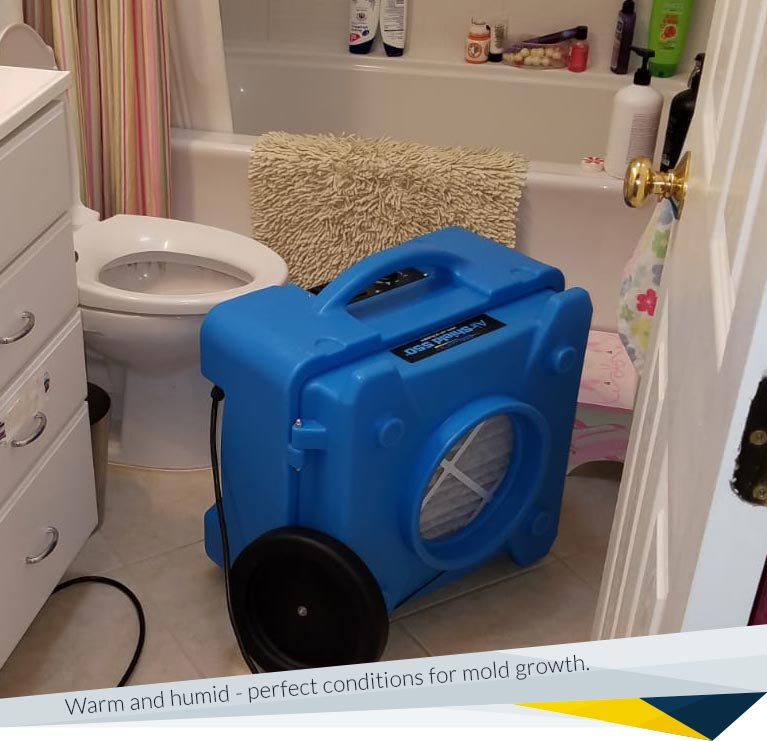
  • Bathrooms and Laundry Areas: These rooms already deal with regular moisture and steam. Add humid summer air, and drying between uses becomes more difficult.
  • Around HVAC and Air Conditioning Components: Air conditioning helps keep indoor spaces comfortable, but condensation can still build up around drain lines, vents, air handlers, and nearby materials. If that moisture does not dry properly, it can contribute to mold growth.
  • Around Windows and Exterior Walls: When warm humid air meets cooler glass or wall surfaces, condensation can form. Because the buildup may happen slowly, the problem is often easy to miss until staining or musty odors show up.
  • Closets, Storage Areas, and Hidden Corners: Tight enclosed spaces tend to trap stale air. If they sit against exterior walls or near areas with recurring moisture, mold can develop without being noticed right away.
Where Summer Mold Often Starts Indoors

How to Reduce Summer Mold Risk

Most prevention steps are simple. The important part is being consistent with them. For broader guidance by weather pattern and region, review these climate-specific mold prevention strategies.

  1. Control Indoor Humidity: Use bathroom exhaust fans, kitchen ventilation, and dehumidifiers where they are needed most. Basements and rooms that feel damp or stuffy usually deserve extra attention.
  2. Dry Wet Areas Quickly: Damp rugs, towels, cardboard, and stored items should not sit in humid spaces for long. Even a small moisture issue is better handled right away than left to dry on its own.
  3. Watch for Condensation: Check windows, vents, pipes, laundry connections, and AC components from time to time. Repeated condensation usually points to a need for better airflow, insulation, drainage, or humidity control.
  4. Handle Small Leaks Early: A slow drip can support mold growth long before it causes visible damage. Summer storms can also expose weak spots that turn minor moisture issues into larger ones.
  5. Improve Airflow: Closed-off spaces often stay damp longer than open rooms. Better circulation can help reduce lingering moisture before it becomes a larger concern.
  6. Store Items More Carefully: Cardboard, paper goods, and fabrics absorb moisture easily. In damp areas, sealed containers usually protect belongings better than open storage.

Signs a Summer Moisture Problem May Be Getting Worse

A stain, an odor, or a patch of discoloration does not always mean the same thing, but recurring moisture signals should not be brushed aside.

You may want to investigate further if you notice:

  • a musty smell that keeps returning
  • discoloration on walls, ceilings, or baseboards
  • repeated condensation in the same area
  • materials that stay damp longer than expected
  • bubbling paint, warped trim, or storm-related staining
  • visible mold growth that comes back after cleaning

None of these signs, by themselves, confirms the full cause or extent of the issue. They do suggest that moisture may still be active somewhere in the property.

When DIY Steps May Not Be Enough

Basic cleanup may help with a small, isolated issue, especially when the moisture source has truly been corrected. Problems that keep returning are different. Hidden moisture, recurring growth, or damp porous materials often need a closer look than a simple surface cleaning can provide.

When that happens, a more thorough evaluation may be the smarter next step. If the issue seems to be spreading or repeatedly returning, professional mold remediation may be the more practical way to address it. FDP Mold Remediation can assess the issue and take the next steps.

What Professional Mold Remediation Helps Address

Professional remediation usually goes beyond cleaning what is easy to see. The broader goal is to address the conditions that allowed the problem to continue.

Depending on the situation, that may involve identifying moisture patterns, isolating affected areas, removing unsalvageable materials, cleaning salvageable surfaces, and supporting proper drying. The exact scope depends on the materials involved, how far the issue has spread, and whether moisture is still active.

For property owners dealing with summer mold concerns, the biggest benefit is often clarity. Instead of guessing whether the issue is limited or likely to return, you get a more grounded understanding of what needs attention. When recurring summer moisture keeps raising the same concerns, contact FDP Mold Remediation to discuss your situation and decide whether professional help makes sense.

Frequently Asked Questions

Is mold more common in summer?

It often becomes more noticeable in summer because higher humidity, condensation, and moisture buildup can create better indoor growing conditions.

What humidity level makes mold more likely?

Mold is more likely when indoor humidity stays above 60% for long periods.

Can air conditioning cause mold?

The equipment itself does not create mold, but condensation, drainage issues, or damp surrounding materials can contribute to growth.

Where should I check first during summer?

Basements, bathrooms, laundry areas, windows, vents, and enclosed storage spaces are some of the most common places to start.

Does a musty smell always mean mold?

Not always, but it is a sign that moisture may be present and the area deserves closer attention.

Can I clean summer mold myself?

That depends on how limited the issue is and whether the moisture source has really been corrected. If the problem keeps returning, a professional assessment is often the better approach.

How do I keep mold from coming back every summer?

Focus on moisture control: reduce humidity, improve airflow, dry wet materials quickly, fix leaks early, and monitor areas that repeatedly develop condensation.

««« Back to our blog


Jacob Smith

About Author

Jacob Smith is a mold remediation expert at . He has over twenty years of experience in the field and likes to write about mold when he is not remediating this fungus from someone's home or facility.

Jacob's Facebook Page
About author

Mold Remediation IICRC Certified
Choose fdp mold remediation with confidence
  • IICRC Certified Mold Remediation
  • Rebuild done by licensed contractors
  • Full Service solution, Inspection, Testing, Remediation
  • Clear communication from quote to completion
  • We finish on time and on budget
  • Applied Structural Drying Technician
  • Water Damage Restoration Technician
  • Applied Microbial Remediation Specialist
  • HEPA-Filtration Units
licensed, certified & insured mold remediation specialists
IICRC Certified
EPA Certified