January 2026

Mold in Bathroom: What It Means, What It Might Not Be, and the Next Smart Step

Bathroom mold is one of those problems that feels small until you wipe away a few specks in the shower corner. Then it shows up again two weeks later. Then you notice the dark line around the caulk, the same patch on the ceiling, or the same musty smell in the bathroom air that makes the whole room feel a little off.

In this guide, we focus on building conditions and practical next steps. We do not diagnose health conditions, and symptoms alone cannot confirm mold exposure or the source of a health concern. Public guidance from sources like EPA and CDC/NIOSH often emphasizes moisture control and scope-appropriate cleanup, rather than treating symptoms or one surface spot as proof of what is happening behind walls or inside materials.

If you want to understand what you are seeing and why it keeps returning, you are in the right place. If you want to talk through what is happening, reach out to FDP Mold Remediation. We can help you sort out what looks surface-level versus what may involve hidden moisture or impacted materials.

Mold in Bathroom: What It Means, What It Might Not Be, and the Next Smart Step

What Bathroom Mold Usually Signals

Mold in bathroom spaces is usually a moisture and drying-time issue. Bathrooms generate humidity from showers, baths, and sink use. If that moisture is not removed quickly, it lingers on surfaces, seeps into gaps, and creates conditions where mold can grow. Small surface growth may be manageable once moisture is controlled, but recurring growth often means ventilation, humidity, or leaks are still in play. The most reliable approach is moisture-first: find the moisture driver, fix it, dry the area, then clean or remove impacted materials based on what they are.

Is Mold Affecting Your Health?
Learn More
Send photos of your mold, get a fast estimate
Attach photos of your mold and we'll be in touch shortly with a pricing estimate.

Mold vs Mildew: Why the Distinction Matters

People often ask about mold and mildew as if one is "fine" and the other is "serious." In everyday conversation, mildew is often used to describe lighter surface growth in damp areas, while "mold" is used as the umbrella term for fungal growth. In a bathroom, both are usually telling you the same thing: moisture is lingering. The practical difference is not the label.

It is where it is growing and what it is growing on. If the growth is on a hard, non-porous surface like tile, it may be easier to clean once the bathroom dries properly.

If the growth is on porous material like drywall, unsealed grout, or backing materials behind caulk, it tends to be more persistent and may require removal or repair rather than repeated surface cleaning.

So, if you are trying to figure out how to get rid of mold in bathroom areas long-term, do not get stuck on terminology. Focus on moisture and materials.

What Causes Mold in the Bathroom

Bathrooms generate a lot of humidity. Hot showers create warm, wet air. That moisture moves to cooler surfaces like ceilings, exterior walls, mirrors, and window frames. If humid air does not leave quickly, water stays on surfaces longer than you think, especially in corners and around fixtures.

The Bathroom Never Fully Dries

The exhaust fan may be weak, rarely used, dirty, or venting into an attic or crawl space instead of outside. Some bathrooms have no fan and the window in the bathroom is a poor substitute when you consider the variety of weather we enjoy. Even a good fan will struggle to remove the steam if it runs for five minutes and then turns off too early.

If your mirror stays fogged for a long time after a shower, that is a measurable clue: drying time is too slow.

Condensation Keeps Feeding the Same Spots

If you see repeated spotting on a ceiling above the shower or on the top corners of an exterior wall, condensation is often involved. It is not always a leak. Sometimes it is humid air repeatedly hitting a cooler surface, creating a damp cycle.

Small Leaks That Never Look Dramatic

A slow drip under a vanity, a tiny leak at a tub edge, or water getting behind a shower surround can keep materials damp without leaving a puddle. Over time, that can contribute to mold in bathroom wall cavities or behind fixtures.

Failing Caulk and Cracked Grout

Caulk is not permanent. Grout is not waterproof unless sealed and maintained. When caulk splits or grout cracks, water can work its way behind surfaces. That is why black mold in shower caulk can return even after you scrub it. You clean the front, but moisture is living behind the line.

Human Habits That Hold Moisture

Wet towels piled in a corner. A bath mat that stays damp all day. A shower curtain that is left folded together so it never dries. These seem minor, but bathrooms are small spaces, and minor moisture becomes major when it happens daily.

Public guidance from CDC/NIOSH emphasizes moisture control and scope-appropriate cleanup. If moisture is ongoing or materials are impacted, the next step often involves more than surface cleaning.

The Musty Smell in the Bathroom: Why It's Often the Best Clue

A lot of homeowners focus on what they can see. But smell is often the better signal. A musty smell in bathroom air can in some cases suggest ongoing dampness even when visible growth looks small. Odor can come from damp drywall behind a shower wall, moisture under flooring edges, wet vanity toe-kicks, gaps around plumbing penetrations, or a fan that is not exhausting properly.

Here is the key difference between "something is a little damp" and "something is persistently damp": persistence. If the smell disappears quickly after drying and stays gone, it may have been a one-time event. If the smell returns, especially after showers or humid weather, there is likely a moisture pattern that keeps repeating.

When you have that pattern, the most helpful move is not stronger cleaner. It is finding where the moisture is sitting and why it is not drying.

Before Labeling Everything As "Mold" Too Quickly

This is one of the most important sections for avoiding wasted time. Bathrooms collect all kinds of films and residues that look suspicious. Some are mold. Some are not. And the difference matters because the "fix" changes.

Pink or Yellow Film in the Shower

That pinkish or yellowish film along grout lines or around drains is often bacteria, not mold. It thrives in damp environments and can return quickly if the shower stays wet. It still means you need better drying and cleaning habits, but it is not the same as fungal growth.

White Haze on Tile or Fixtures

White haze can be mineral deposits from hard water or cleaner residue. It can also appear as a chalky buildup on grout. Again, not always mold, but it does point to moisture and surface conditions.

Dark Spots on the Ceiling

Dark ceiling spots can be staining from repeated condensation, old moisture events, or microbial growth. The deciding factor is whether the ceiling is getting damp repeatedly and whether the spotting changes over time.

Black Specks in Caulk

Black specks in caulk can be microbial growth on the surface, growth behind the caulk line where moisture is trapped, or staining from repeated dampness. It looks similar, but the fix is not always the same.

If you clean something and it comes back quickly, treat that as a moisture signal. It usually tells you that the surface is staying damp or that water is getting behind materials.

Black Mold Bathroom Fears

Let's talk about the phrase "black mold in the bathroom", because it is everywhere. People use "black mold" to describe dark spotting on caulk, grout, ceilings, or drywall. Color alone does not confirm the type of mold. It does not confirm risk level. It does not tell you what is happening behind the surface.

What matters more than the word "black" is scope and conditions. If the dark specks are limited to a small area on the caulk and the bathroom dries quickly, it often behaves like a surface moisture problem.

If the dark spotting is spreading, recurring quickly after cleaning, showing up on drywall, or paired with bubbling paint or soft materials, it becomes more likely that moisture is getting into materials. That is when a simple wipe-down stops being the right solution.

Black mold in shower areas is especially common because showers get wet daily. If caulk is failing or grout is cracked, moisture can stay trapped where you cannot see it.

Common Places Where Mold Grows in Bathrooms

Mold in Bathroom Walls

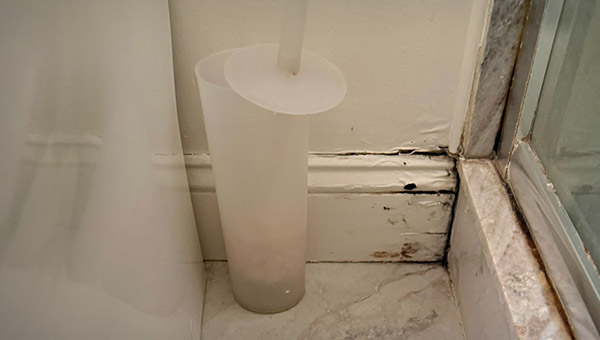
Mold in bathroom wall cavities is rarely the first thing someone notices. Most people notice building clues, not health effects. Paint starts bubbling. The drywall feels soft near a corner. The baseboard looks swollen or stained. Sometimes it shows up after a slow leak behind a toilet, under a vanity, or around a tub edge that never fully dries.

If you suspect mold in bathroom wall areas, the biggest question is not "what cleaner should I use?" It is "what is keeping that wall damp?" Common drivers include plumbing drips, water getting behind tile or shower surrounds, condensation on exterior walls, and unsealed pipe penetrations. Surface cleaning usually does not address wall cavity moisture, so this often needs evaluation, not a stronger spray.

Mold in the Shower

Black mold in the shower is a common topic searched because you're staring at it every day. You might see dark specks along the caulk line, shadowy staining in grout corners, or spotting that keeps returning in the same seam. Color alone cannot confirm what it is or whether anything is happening behind the surface. What matters more is the pattern.

If it wipes away and the shower dries quickly, it may be surface growth driven by routine moisture. If it returns fast, spreads along caulk, or shows up where grout is cracked, moisture may be getting behind materials. In that case, improving drying time and replacing failing caulk after the area is fully dry often matters more than scrubbing harder.

Mold on the Bathroom Ceiling

Mold on the bathroom ceiling often surprises people because it feels like it came out of nowhere. In reality, ceilings are common condensation zones, especially above showers. Warm, humid air rises, hits a cooler surface, and leaves moisture behind - sometimes just enough to support spotting over time. This is why ceiling growth often appears in the same area repeatedly, especially if the exhaust fan is weak, vents into the wrong place, or is not run long enough after showers.

The key question is whether the ceiling is getting damp from condensation or from a leak above. If the spotting clusters above the shower and the ceiling otherwise look intact, condensation is a strong suspect. If you see water stains that spread, peeling paint, or dampness unrelated to shower use, a leak becomes more likely and should be investigated.

Mold Under the Sink

Mold under a sink is often tied to slow, repeat moisture that never looks dramatic. A small drip at the trap, a loose supply line, or water splashing over the rim can keep the cabinet base and toe-kick damp for long periods. Because the space is closed, drying is slow, and odors can build before anything looks obvious.

Common clues include a musty smell when you open the cabinet, swelling or soft wood near the bottom panel, peeling laminate, or staining around plumbing penetrations. The key question is what is keeping the area wet.

How to Get Rid of Mold in Bathroom Spaces: the Moisture-first Method

If you have been trying to figure out how to get rid of mold in bathroom areas without living in a constant scrubbing loop, use this moisture-first sequence:

  1. Make the bathroom dry faster: Run the exhaust fan during showers and keep it running afterward until the room feels dry. No fan? Use a window when conditions allow, keep the door open, and create airflow. The goal is shorter drying time.
  2. Check if water is getting behind materials: Split caulk, cracked grout, bubbling paint, or a spot that returns in the exact place can point to moisture getting into materials, not just sitting on top.
  3. Match cleanup to surface and scope: Tile and other hard surfaces are different from porous materials like drywall. Avoid aggressive dry brushing or scraping that can spread debris. Follow product labels and never mix chemicals. Bleach and ammonia together can create hazardous fumes. Bleach and vinegar should also never be mixed.
  4. Confirm the pattern changed: If growth stops after drying improves, you likely addressed the driver. If it returns quickly, treat that as a signal that moisture is still active or trapped.
  5. Prevention: Keep the bathroom on a routine that favors fast drying. Run the fan long enough, keep grout and caulk maintained, fix small leaks early, and avoid leaving wet towels or mats in piles that hold moisture.

EPA guidance commonly references keeping indoor humidity controlled to reduce mold growth conditions. Many homeowners use a simple target like keeping indoor humidity from lingering at high levels, often below about 60%, with lower targets depending on comfort and climate. The most practical indicator is whether you see persistent condensation.

If the same area keeps returning, the affected surface is drywall or ceiling, or there is a musty odor, call FDP Mold Remediation at 877-421-2614 to discuss what you're seeing. We can help you decide what is likely surface-level versus what may involve hidden moisture and impacted materials.

FAQ

Why does mold in bathroom areas keep coming back?

Because cleaning removes what you see, not what keeps feeding it. If the bathroom stays damp, growth can return. The fix is usually better drying, ventilation, and addressing leaks or trapped moisture behind materials.

How can you get rid of mold in bathroom grout without it returning?

Clean the visible growth, then focus on why the grout stays wet. Improve drying time, maintain grout and caulk, and address any cracks where water can get behind surfaces. If the same line returns quickly, moisture may be trapped behind the surface.

Is mold vs mildew a meaningful difference for homeowners?

In practical terms, both usually point to damp conditions. What matters is whether the growth is on a hard surface you can clean, or in porous materials that may need removal or repair.

What should I do if I have black mold in the shower caulk?

First, treat it as a moisture signal. If the caulk is failing, moisture may be trapped behind it, which is why it returns. Improving drying and replacing failing caulk can matter more than repeated scrubbing.

Does a musty smell in the bathroom always mean mold?

Not always, but it often indicates persistent dampness. If the smell returns after cleaning and drying, it is worth investigating hidden moisture sources, ventilation, and areas where water may be trapped.

How to prevent mold in bathroom spaces if I have no fan?

You can still reduce moisture by creating airflow with the door and a window when conditions allow, wiping down wet surfaces, and keeping the room dry. Long-term prevention is usually easier when ventilation is improved.

When is mold on the bathroom wall a concern?

If drywall is soft, paint is bubbling, there is swelling, staining, or a persistent musty odor near a wall, moisture may be getting into materials. That is typically a situation where an assessment is more useful than surface cleaning.

Calm Next Step

If you are dealing with mold in bathroom spaces, you do not need to jump straight to worst-case thinking. Start with what you can control: drying time, ventilation, and obvious moisture sources. If the issue keeps returning, treat that as information. Recurrence usually indicates that moisture is still active or that water is getting into materials.

If you want help turning your bathroom's early moisture clues into a clear plan, contact FDP Mold Remediation. We can help you distinguish between surface growth and hidden moisture, and we can advise on which materials are affected and which mold solutions are required.

««« Back to our blog


Jacob Smith

About Author

Jacob Smith is a mold remediation expert at . He has over twenty years of experience in the field and likes to write about mold when he is not remediating this fungus from someone's home or facility.

Jacob's Facebook Page
About author

Mold Remediation IICRC Certified
Choose fdp mold remediation with confidence
  • IICRC Certified Mold Remediation
  • Rebuild done by licensed contractors
  • Full Service solution, Inspection, Testing, Remediation
  • Clear communication from quote to completion
  • We finish on time and on budget
  • Applied Structural Drying Technician
  • Water Damage Restoration Technician
  • Applied Microbial Remediation Specialist
  • HEPA-Filtration Units
licensed, certified & insured mold remediation specialists
IICRC Certified
EPA Certified