
Why Mold Under the Sink Is More Than Just a Nuisance
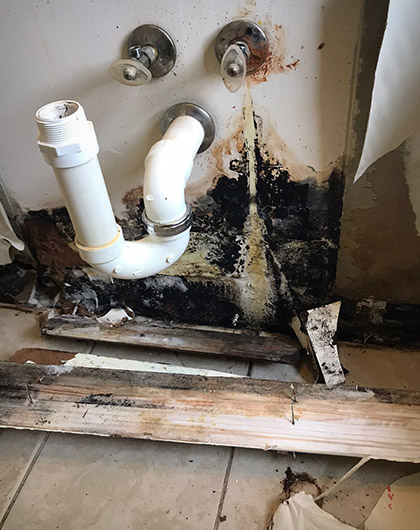
Mold under the sink is one of those hidden household problems that often goes unnoticed until it becomes a serious issue. The dark, damp space beneath your sink is the perfect breeding ground for mold. And once it starts growing in your kitchen or bathroom, or even the laundry room, it can spread quickly, damaging the cabinet and even posing health risks to your family.
If you've noticed a musty smell, discoloration, or warped wood under your sink, you're not alone. Thousands of homeowners deal with this exact issue every year, and many don't realize how important it is to act fast.
At FDP Mold Remediation, we've helped countless homeowners safely remove mold from under sinks and prevent it from coming back. In this guide, we'll walk you through how to identify mold, clean it properly, and know when it's time to call in the pros.
Why Mold Grows Under Sinks
The space under your sink might seem harmless, but it's actually an area of your home that is most prone to mold growth. Why? Because it has all the characteristics that mold needs to thrive: moisture, darkness, and organic material.
Here are the most common reasons mold appears under sinks:
- Leaky Pipes: Even a slow drip can create enough moisture to support mold growth over time.
- Condensation: Cold water pipes can sweat in humid environments, especially in poorly ventilated cabinets.
- Spills and Splashing: Water from cleaning or dishwashing can seep into the cabinet base and go unnoticed.
- Damp Particle Board or Wood: Many sink cabinets are made of porous materials that absorb moisture and feed mold.
- Poor Airflow: Closed cabinet doors trap humidity, creating a perfect microclimate for mold to grow.
Understanding these causes is the first step toward prevention. Regular inspection and maintenance are important to identify mold under the sink as soon as possible.
What Does Mold Under the Sink Look Like?
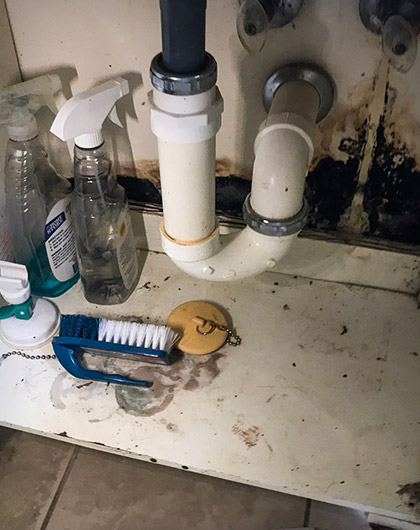
Mold under the sink often appears as irregular patches that may be fuzzy, slimy, or powdery. It typically grows in corners, along the cabinet base, around plumbing fixtures, or on the back wall, all areas that stay damp and may be poorly ventilated.
Here's what to look for:
- Black mold: Dark, spotty patches that may look slimy or fuzzy. Often found on wood, drywall, or caulking.
- White mold: Powdery or chalky in appearance, sometimes mistaken for dust or mineral buildup.
- Green or gray mold: Often fuzzy and found on damp wood or particle board.
- Yellow mold: Slimy and bright, usually growing in clusters.
- Water damage signs: Warped wood, bubbling paint, or soft spots in the cabinet base can indicate hidden mold.
You might also notice a musty, earthy smell. This is a strong indicator that mold is present, even if it isn't visible yet.
Tip: If you're unsure whether what you're seeing is mold, take a photo and compare it to online examples, or contact a professional like FDP Mold Remediation for a quick assessment.
Is Mold Under the Sink Dangerous?
Yes! Mold under the sink can be dangerous for your health and home. While not all mold is toxic, even common household strains can trigger allergic reactions, worsen asthma, and cause respiratory irritation. This is especially true for small children, the elderly, or anyone with a weakened immune system.
Structural Damage
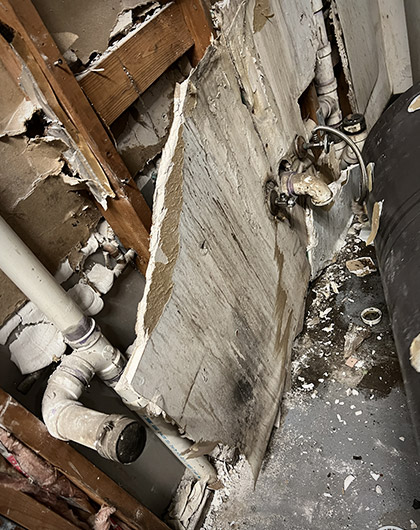
Mold feeds on organic materials like wood and particle board. Over time, it can weaken the cabinet base, walls, and even spread into surrounding drywall or flooring. If left untreated, it may require costly repairs or even full cabinet replacement.
Health Risks
Mold spores can become airborne and circulate through your home. Symptoms may include coughing, sneezing, skin irritation, headaches, and fatigue. Black mold is known in particular for producing mycotoxins that can pose more serious health risks.
If you or your family are experiencing unexplained symptoms and suspect mold under the sink, it's best to have it professionally assessed. FDP Mold Remediation can help determine the severity and safely remove the mold before it spreads further.
How to Find Mold Under the Sink
If you suspect mold under your sink, a quick inspection can help you confirm the problem before it spreads further. Here's how to check safely and thoroughly:
What You'll Need:
- Flashlight or phone light
- Gloves and a mask (to avoid breathing in spores)
- Screwdriver (if you need to remove panels or access tight spaces)
Step-by-Step Inspection:
- Clear the Area: Remove all items from under the sink so you can see the entire cabinet base and walls.
- Use a Flashlight: Shine light into corners, behind pipes, and along the back wall. Mold often hides in dark, hard-to-see areas.
- Look for Visual Clues:
- Discoloration or dark patches
- Warped or swollen wood
- White, fuzzy, or slimy growth
- Water stains or bubbling surfaces
- Smell for Mustiness: A musty odor is often one of the first signs of hidden mold.
If you find visible mold or suspect it's spreading behind the cabinet or into the wall, it's time to take action. FDP Mold Remediation offers professional inspections and can help you determine the safest next steps.
How to Get Rid of Mold Under the Sink (DIY Guide)
So, you've found mold under your sink. Don't panic. If it's a small patch and you don't see any mold on walls or flooring, you can likely take care of it yourself with a little time and the right approach.
Let's walk through it step by step.
First, Protect Yourself
- Put on gloves, a mask (preferably N95), and goggles
- Open a window or turn on a fan for ventilation
- Keep kids and pets out of the area
What You'll Need:
- White vinegar or hydrogen peroxide (both kill mold)
- Baking soda (optional, for scrubbing power)
- Spray bottle
- Scrub brush or sponge
- Clean cloths or paper towels
- Trash bags
- A fan or dehumidifier (for drying)
Let's Get Cleaning:
- Fix the Leak First: If there's a drip or condensation issue, take care of that before anything else. Mold will just come back if moisture sticks around.
- Clear Out the Cabinet: Remove everything under the sink so you have space to work, and so nothing gets contaminated.
- Spray the Moldy Area: Use vinegar or hydrogen peroxide and spray it directly on the mold. Let it sit for 10–15 minutes to break it down.
- Scrub It Clean: Grab your brush or sponge and scrub the area. If it's stubborn, sprinkle on some baking soda and scrub again.
- Wipe and Dry: Use clean cloths or paper towels to wipe everything down. Then run a fan or dehumidifier to make sure the area is completely dry.
- Toss Contaminated Materials: Seal up any used cloths, gloves, or moldy debris in a trash bag and throw it out right away.
Heads up: If the mold keeps coming back, covers a large area, or smells really strong, it's time to call in the pros. FDP Mold Remediation can safely remove the mold and make sure it doesn't return.
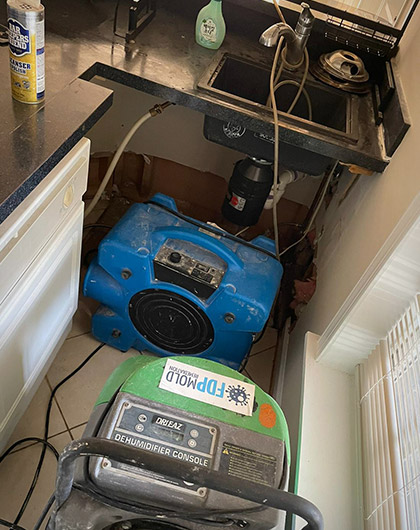
Special Cases: When Mold Under the Sink Gets Complicated
Sometimes, mold under the sink isn't just a surface issue, it can show up in tricky spots or involve materials that make cleanup harder. Here's how to handle a few of the most common scenarios:
Mold on Particle Board
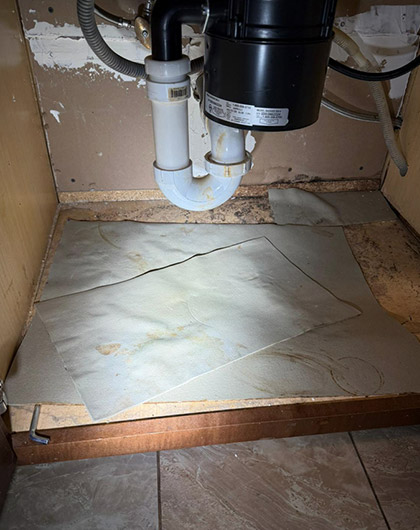
Particle board (often used in cabinet bases) soaks up moisture like a sponge. If it's swollen, soft, or crumbling, cleaning won't be enough. Trying to clean mold from damaged particle board won't work, so it likely needs to be removed and replaced.
Black Mold Under the Sink
If you suspect black mold (especially if it's slimy, dark, and has a strong odor), don't try to tackle it alone. Black mold can release mycotoxins that may cause serious health issues. This is a job for professionals like FDP Mold Remediation, who have the tools and safety protocols to handle it properly.
Mold on Pipes
Mold growing on pipes is often caused by condensation. After cleaning the mold, consider wrapping the pipes with insulation to prevent future moisture buildup.
Mold in the Cabinet Walls or Back Panel
If mold has spread into the drywall behind it or to the cabinet's back wall, the situation is more serious. You may need to remove panels or cut into the wall to fully eliminate the mold. This is another example where professional remediation is the safest route.
How to Prevent Mold from Coming Back
Cleaning up mold is only half the battle. The real challenge is keeping it from coming back. Fortunately, a few simple habits and upgrades can make a big difference.
1. Fix Leaks Immediately
Even a slow drip under the sink can create enough moisture for mold to thrive. Check your plumbing regularly and repair any leaks as soon as you spot them.
2. Improve Ventilation
Keep cabinet doors open occasionally to let air circulate, especially after using hot water. If your kitchen or bathroom tends to stay humid, consider using a small fan or dehumidifier nearby.
3. Keep the Area Dry
Wipe up spills right away and avoid storing wet items under the sink. You can also place a moisture-absorbing product (like silica gel or baking soda) in the cabinet to help control humidity.
4. Seal or Replace Vulnerable Materials
If your cabinet base is made of particle board or untreated wood, sealing it with a waterproof coating can help. In some cases, replacing it with a more moisture-resistant material is worth the investment.
5. Do Regular Inspections
Make it a habit to check under your sink every few weeks. Catching moisture or mold early is the best way to avoid a bigger problem later.
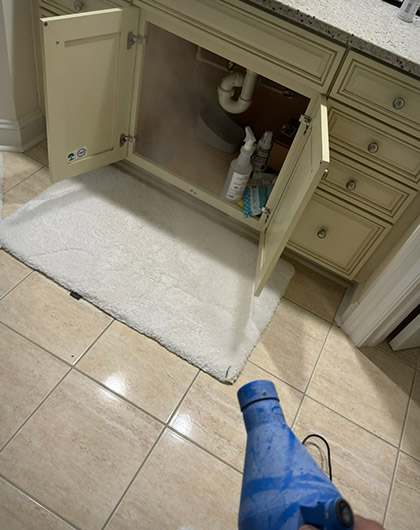
When to Call a Mold Remediation Professional
While small patches of mold can often be handled with DIY methods, there are times when calling in a professional isn't just smart, it's necessary.
Here's when you should skip the vinegar and call the experts:
- The Mold Keeps Coming Back
- It's Spread Behind the Cabinet or Into the Wall
- Experiencing Health Symptoms
- You're Dealing with Black Mold
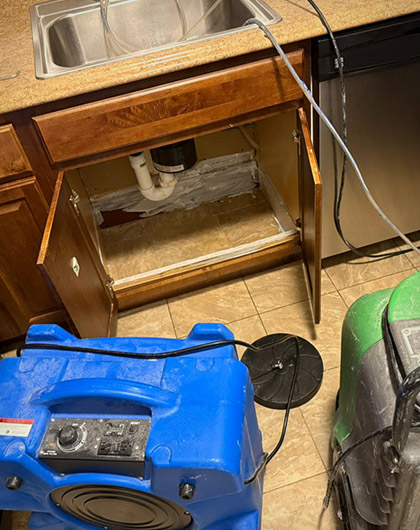
Why Choose FDP Mold Remediation?
At FDP Mold Remediation, we specialize in identifying and removing mold at the source, not just cleaning what's visible. Our certified technicians use advanced tools to detect hidden moisture, safely remove contaminated materials, and restore your space so mold doesn't come back.
Don't Let Mold Linger Under Your Sink
Mold under the sink might seem like a small issue, but left unchecked, it can lead to serious health risks and costly damage. The good news? With the right steps, you can spot it early, clean it up safely, and keep it from coming back.
Whether you're dealing with a minor patch or something more serious, the key is to act quickly and thoroughly. And if you're ever unsure, don't hesitate to bring in professionals who know how to handle it right.
FDP Mold Remediation is here to help, from inspections and cleanup to full remediation and prevention. If you're ready to stop mold in its tracks, contact us today for expert support and peace of mind.