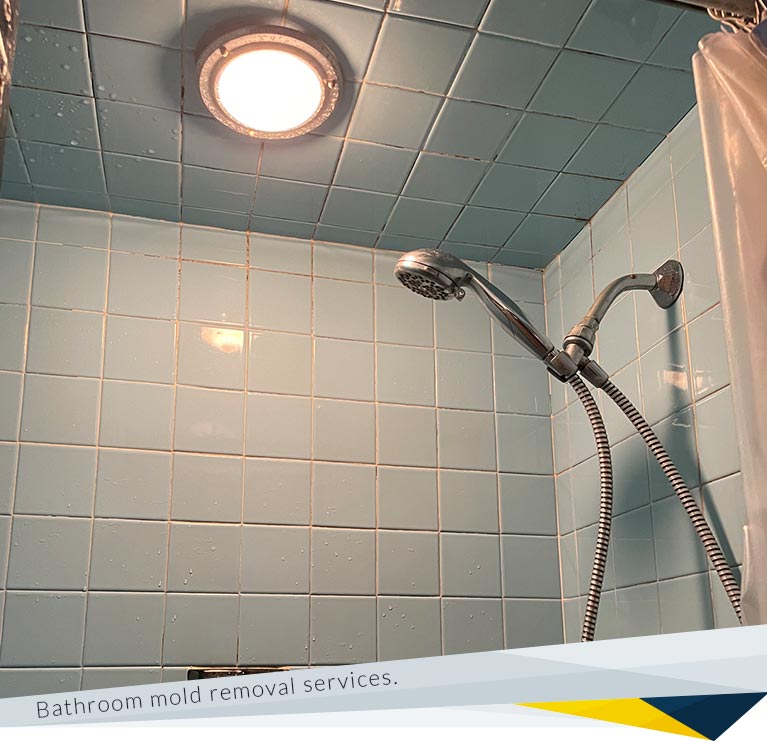
You don't wake up one day excited to research bathroom mold removal. You end up here because something has changed. The grout is darker than it used to be. The caulk has black specks that look like they are spreading. The mirror fogs up, and the walls stay damp longer than they should. Or you walk in and catch that unmistakable musty smell in the bathroom air that makes you think, "Something might be growing here."
Let's make this simple. Mold in a bathroom is usually a moisture-and-drying problem first, and a cleaning problem second. If you only scrub, you often end up playing an exhausting loop of cleaning, enjoying the clean bathroom, seeing the mold come back, and repeating, again and again.
Public guidance from sources like CDC/NIOSH and the EPA generally emphasizes moisture control and scope-appropriate cleanup, rather than relying on surface cleaning alone.
Bathrooms are basically humidity factories. Hot showers create warm, wet air. If that moisture does not leave quickly, it settles onto cooler surfaces and keeps them damp. Mold does not need a dramatic flood to grow. It just needs repeated dampness, a little dust, and time.
Most persistent bathroom mold problems come down to one of these patterns.
If you are trying to figure out how to get rid of mold in the bathroom for good, the truth is you have to change the drying conditions, not just clean what you see.
People often focus on visible spots, but smell is the bigger clue. A persistent musty smell in the bathroom suggests moisture is lingering somewhere consistently.
Common odor sources include damp drywall behind a shower wall, moisture under flooring edges, wet vanity toe-kicks, gaps around plumbing penetrations, or a fan that is not exhausting properly. Sometimes it is as simple as towels and bathmats staying damp. Sometimes it points to hidden moisture that needs investigation.
If you clean surfaces and the smell stays, do not keep trying stronger and stronger cleaners. Follow the moisture trail instead.
This part is oddly comforting because it prevents panic-cleaning. Some things that look like mold are not mold. Pink or orange film in showers is often a different type of buildup than mold. Dark staining can be old moisture stains. White haze can be cleaner residue or mineral buildup. That said, you still shouldn't ignore it, but identifying it correctly helps you make the right decisions about how to address it.
A musty smell in bathroom air may be more telling than a single spot on grout, but it isn't certain. The smell suggests dampness persists somewhere, even if the visible area looks small. If you clean something and it returns quickly, treat that as your signal that moisture is still feeding it.
Most failed bathroom mold removal attempts fall into the same few traps: cleaning without fixing humidity, bleaching without improving drying time, re-caulking over damp surfaces, painting over ceiling spotting without addressing condensation, and ignoring small leaks that keep feeding moisture behind the scenes. If any of those are happening, the mold problem usually isn't winning - the moisture is.
Rather than starting with a mold spray from the drug store, start with this sequence: dry, fix, then clean.
Run the exhaust fan during showers and keep it running afterward long enough for the room to dry. If your mirror stays fogged for a long time, your bathroom is telling you the moisture is hanging around.
If you do not have a fan, or the fan is weak, drying is going to be harder. You can still reduce moisture by keeping the door open after a steamy shower or opening a window if weather conditions allow. This can improve airflow, but correcting ventilation issues will ease your attempts to keep the bathroom dry in between uses.
If caulk is split, grout is cracked, or paint is bubbling, moisture may be getting into materials, not just sitting on top. That is when surface cleaning becomes a temporary fix.
A musty smell in the bathroom that persists even after cleaning often points to hidden dampness, like behind the vanity, under the flooring edges, or around plumbing penetrations.
Tile and sealed surfaces can often be cleaned more effectively than drywall or porous materials. If the affected area is on drywall, ceilings, or soft materials, or if it is widespread, you should be cautious about aggressive scrubbing that can spread particles.
EPA materials commonly note that cleanup works best when the moisture problem is fixed, and that damaged porous materials may need removal rather than repeated cleaning. The right method depends on what the surface is and whether it is staying damp.
If you're stuck between "this is probably fine" and "I don't want to mess this up," call us at 877-421-2614. We'll help you decide whether a small, careful cleaning approach makes sense or whether professional mold remediation is the safer next step.

Some bathroom mold issues are small surface problems, and some are not. DIY may be reasonable when the affected area is small, the material is non-porous, the bathroom dries well, and you have corrected the moisture pattern that caused it. In those cases, your goal is to clean the surface and keep the room dry enough that it does not return.
DIY tends to backfire when fungus keeps returning, when the mold issue involves ceilings or drywall, when materials feel soft, or when there is a leak. In those cases, repeated scrubbing can waste time and still not address the source.
CDC/NIOSH guidance frames the right approach as scope-driven and moisture-first, with extra caution when materials are damaged or the affected area is larger. If you want a simple rule: if it returns quickly after cleaning, it is often not a "clean better" problem. It is usually a "drying and moisture" problem.
A bathroom mold removal service should not feel like someone is showing up with a spray bottle and optimism. A proper plan addresses both the impacted materials and the moisture conditions that allow growth. It also avoids promising a "mold-free forever" bathroom, because the real goal is reducing conditions that support repeat growth.
A typical professional scope may include:
This is where professional mold remediation becomes valuable. It creates a clear scope and a clear moisture plan, instead of relying on surface cleaning alone.
During a mold inspection, we look at where moisture is coming from, what materials are affected, and whether porous materials may need removal, including areas where shower mold removal is needed. You'll get a clear scope that aligns with what we find, plus prevention steps tailored to how you use your bathroom day-to-day.
If you want a clear, non-alarmist plan, our mold specialists can evaluate your bathroom, explain options, and outline the next steps for bathroom mold removal. Call 877-421-2614 to schedule an assessment.
Bathroom mold prevention is mostly about drying time. If the bathroom dries quickly after use, mold has fewer chances to take hold. If the bathroom stays damp, mold has a consistent opportunity.
Use the fan consistently, keep airflow moving, fix small leaks early, replace failing caulk, and seal and maintain grout where appropriate. Try not to leave wet towels and mats piled in a corner, because they keep humidity elevated after showers.
EPA guidance is clear that moisture control is the key to preventing mold growth, and many homeowners use a simple goal like keeping indoor humidity from lingering at high levels (for example, staying under the range where you start seeing frequent condensation, which often happens around 60% or higher, depending on the home).
Because cleaning removes what you see, not the moisture pattern that caused it. If the bathroom stays damp, growth often returns. Focus on drying time, ventilation, and leaks.
Bleach is not a universal solution and is not appropriate for every surface. It can also add moisture, and it may not address growth behind caulk or porous materials. The safer approach depends on the material and the scope.
Not always. Many decisions can be made based on visible conditions, material type, and moisture patterns. Testing can be useful for documentation or specific situations, but it is not required for every case.
The sooner the better. CDC/NIOSH guidance emphasizes prompt drying and fixing the moisture source as part of appropriate remediation.
If your bathroom mold situation feels confusing, you do not need to jump straight to worst-case thinking. Start with the basics: how fast does the room dry, is there a leak, and is moisture getting into materials?
If you want help translating what you are seeing into a clear plan, call FDP Mold Remediation at 877-421-2614 or fill out the contact form. We can help you understand whether you're dealing with a surface cleanup, a ventilation problem, a leak, or a situation where professional mold remediation is the right move.