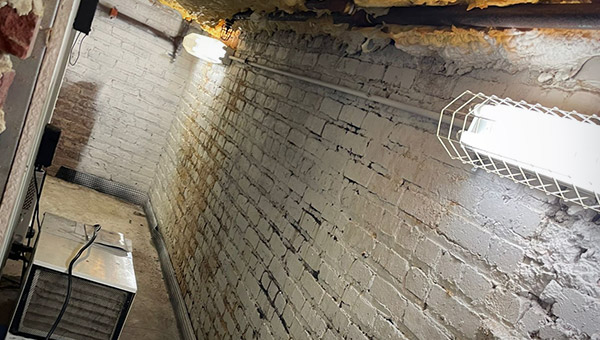
How to Identify Mold in Your Basement
Spotting mold early can save you time, money, and stress. Here's how to identify it:
Visual Signs of Mold
When identifying mold in your basement, it's important to look for discolored patches on various surfaces such as walls, floors, and ceilings. Mold can present in a range of colors, including black, green, white, and even orange, and often has a texture that appears fuzzy or slimy. Pay close attention to corners, behind furniture, under sinks, around windows, and near water heaters.
Musty Odors and What They Mean
A persistent musty smell is a telltale sign of mold, even if you can't see it. This odor is caused by microbial volatile organic compounds released by mold. To locate the source:
- Follow the scent to identify the general area.
- Inspect areas with poor ventilation where odors may be more concentrated.
Hidden Mold
Mold can often develop in areas that are not immediately visible, such as behind walls, within wall cavities, or under flooring (beneath carpets, tiles, or wooden floors). Moisture in these hidden spaces can lead to mold growth. HVAC systems, including air ducts, filters, and drip pans, can also harbor mold.
Since these areas are not easily accessible for a visual inspection, professional mold testing-using tools like moisture meters and thermal imaging cameras-may be required to confirm hidden mold growth.
By paying attention to visual signs, odors, and potential problem areas, you can better assess whether mold might be present in your basement.