November 2023
updated: 04/26/2026
Can Toxic Mold Cause Neuropathy? Emerging Research & Symptoms
Toxic mold exposure is being investigated as a potential contributing factor to neuropathy, although the medical link is still a subject of scientific debate. Concerns about whether toxic mold can cause neuropathy have grown in recent years, especially among people who live or work in mold-prone environments. As a leader in mold remediation, FDP Mold Remediation offers insight into what the latest research may discover about this complex issue.
Key Takeaways
- Neuropathy Cause & Link: While usually stemming from diabetes or injury, emerging research suggests that mycotoxins released by toxic mold (like Stachybotrys) may also contribute to nerve damage.
- The Mechanism of Damage: Mycotoxins are fat-soluble, enabling them to cross the blood-brain barrier and attack nerves through oxidative stress, destruction of the protective myelin sheath, and triggering autoimmune responses.
- The Symptoms: Clinical evidence shows mold exposure can simultaneously affect the body (numbness, tingling, pain) and the brain (cognitive impairment, "brain fog," and dizziness).
- Prevention & Action: Protecting your health requires strict moisture control to prevent mold growth. If you experience nerve symptoms, consult a neurologist first, then seek certified remediation for your environment.
What Is Neuropathy and Its Many Causes
Neuropathy is nerve damage that transmit signals between the body and the brain. It can cause tingling, numbness, burning sensations, and muscle weakness.
The most common causes include diabetes, physical injury, infections, autoimmune conditions, nutritional deficiencies (especially vitamin B12), and side effects of certain medications such as chemotherapy. However, in recent years, researchers have explored whether environmental exposures, such as to toxic molds and their byproducts (mycotoxins), might contribute to or worsen this condition.
What We Know About Toxic Mold
"Toxic mold" refers to species that produce mycotoxins - chemical compounds that can be harmful when inhaled or ingested. Well-known examples include Stachybotrys chartarum (black mold), Aspergillus, and Penicillium. These molds thrive in damp, humid, or water-damaged environments.
Key Research: The Link Between Mold and Neuropathy
While agencies like the CDC primarily focus on the respiratory effects of mold (such as asthma and allergies), a growing body of research in environmental medicine suggests that exposure to water-damaged buildings may have significant neurological consequences.
It is important to note that this is an area of emerging science. While a definitive cause-and-effect relationship is still being debated in some medical circles, published studies have documented measurable nerve damage and cognitive issues in patients exposed to specific mycotoxins.
1. Clinical Evidence of Nerve Damage
One of the most significant studies regarding this link was published in the Archives of Environmental Health. Researchers examined patients with documented exposure to molds (specifically Stachybotrys, Aspergillus, and Penicillium) who were experiencing neurological symptoms.
The study found that a significant percentage of these patients exhibited abnormal neurophysiological measurements, consistent with peripheral neuropathy. The researchers concluded that the neurotoxic effects of mixed mold exposure could lead to persistent nerve dysfunction.
2. The Mechanism: How Mycotoxins Reach the Nerves
How does a spore on a wall damage a nerve in your foot? The answer lies in the chemical structure of mycotoxins.
Many mycotoxins, such as Trichothecenes and Ochratoxin A, are lipophilic, meaning they dissolve in fats. This property allows them to cross protective biological barriers, including the Blood-Brain Barrier (BBB). Once these toxins enter the nervous system, they can cause damage through two primary pathways:
- Oxidative Stress: Mycotoxins have been shown to deplete the body's glutathione (a master antioxidant) and increase "Reactive Oxygen Species" (ROS). This creates a state of oxidative stress that damages the mitochondria within nerve cells, leading to cell death (apoptosis).
- Demyelination: The myelin sheath is the protective fatty coating around your nerves that ensures signals travel quickly. Because mycotoxins target fatty structures, they may degrade this sheath. Without myelin, nerve signals slow down or stop, resulting in the sensations of numbness and tingling.
3. Autoimmunity and Molecular Mimicry
Another theory supported by research involves the immune system. A study led by immunologist Dr. Aristo Vojdani suggested that mycotoxins can trigger an autoimmune response.
This occurs through molecular mimicry: the chemical structure of the mold toxins resembles the structure of human nerve tissue. When the body produces antibodies to attack the mold, those antibodies may accidentally attack the patient's own peripheral nerves, leading to autoimmune neuropathy.

Recognizing the Symptoms: Peripheral vs. Central Effects
Because mycotoxins can travel through the bloodstream, they may affect different parts of the nervous system simultaneously. In clinical observations, symptoms are often divided into two categories: those affecting the extremities (Peripheral Neuropathy) and those affecting the brain (Central Nervous System effects).
1. Peripheral Neuropathy Symptoms (The Body)
These symptoms occur when the nerves outside the brain and spinal cord, specifically those responsible for sensation in the hands and feet, are damaged or inflamed. Mold-exposed patients have been found to have objective delays in peripheral nerve signal transmission and weakness.
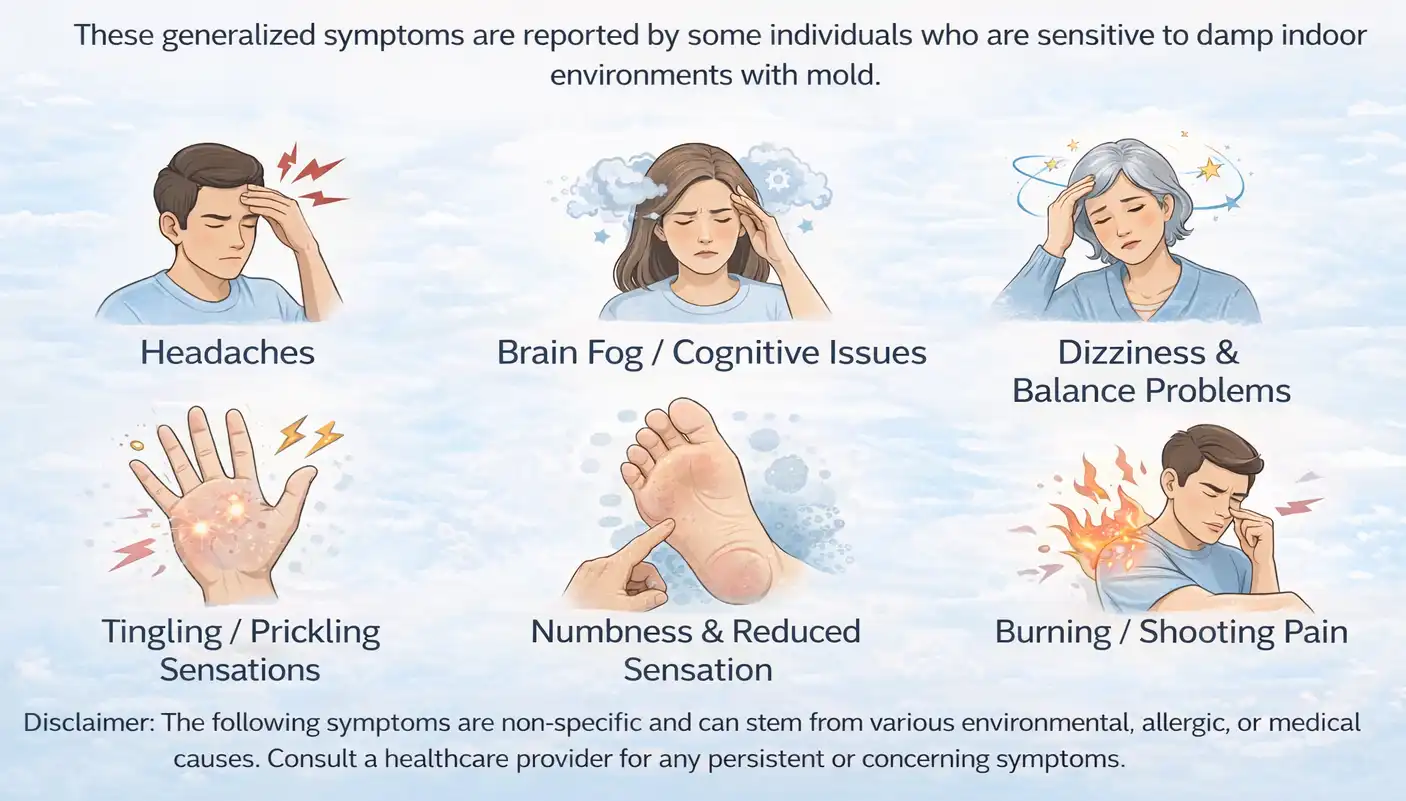
- Paresthesia: A "pins and needles" sensation, typically starting in the toes or fingers.
- Hypesthesia: Areas of skin that feel numb or have reduced sensation to touch.
- Burning or Shooting Pain: Often described as an electrical shock sensation, resulting from the misfiring of damaged nerve endings.
- Motor Weakness: Difficulty gripping objects or a feeling of "heaviness" in the legs.
2. Neurocognitive Symptoms (The Brain)
Research indicates that when mycotoxins cross the blood-brain barrier, they can trigger neuroinflammation. This often presents as "Toxic Encephalopathy," commonly referred to as "brain fog."
- Cognitive Impairment: Difficulty concentrating, word-finding difficulties, and short-term memory lapses.
- Persistent Headaches: Often resistant to standard pain relievers.
- Mood Dysregulation: Unexplained anxiety, irritability, or depression, potentially linked to neuroinflammation disrupting neurotransmitter production.
- Equilibrium Issues: Dizziness or vertigo, as the vestibular nerve (inner ear) can also be affected.
Note: Symptoms can vary significantly based on the duration of exposure, the species of mold (e.g., Stachybotrys vs. Aspergillus), and individual genetic susceptibility (such as the HLA-DR gene).
Reducing Risk: Mold Prevention and Remediation
Even though the neurological effects of mold are not fully established, preventing exposure remains important for overall health. Key steps include:
- Keep indoor humidity below 50%.
- Fix water leaks promptly and dry affected areas within 24-48 hours.
- Ensure good ventilation, especially in bathrooms, basements, and kitchens.
- Schedule professional mold inspections if you notice a musty odor or visible growth.
- Use dehumidifiers or air purifiers in damp environments.
Medical Disclaimer & Context
Scientific Consensus: The link between mold exposure and permanent neurological damage is an area of active research and ongoing medical debate. While functional and environmental medicine specialists often diagnose "Mycotoxin-Induced Neuropathy," major organizations like the CDC currently emphasize respiratory symptoms (asthma, allergies) as the primary health risk of mold.
Not Medical Advice: FDP Mold Remediation provides environmental inspection and structural remediation services. We are not medical doctors. The information in this article is for educational purposes based on peer-reviewed research and should not replace professional medical diagnosis. If you are experiencing neurological symptoms, please consult a neurologist immediately to rule out other causes such as diabetes, vitamin deficiencies, or autoimmune disorders.
The Bottom Line
While toxic mold exposure has been associated with a range of health complaints, scientific evidence directly linking mold to neuropathy is still emerging and not definitive. Most neuropathy cases result from other medical or metabolic causes.
However, living in a mold-infested environment is never safe. Taking preventive and corrective actions protects not only your home but also your overall well-being.
Frequently Asked Questions
Is there proven evidence that mold causes neuropathy?
Evidence is still developing. Some publications discuss possible associations in certain contexts, but a clear cause-and-effect link is not established across the broader medical community.
What do people mean by "toxic mold"?
The phrase is commonly used online to describe molds that can produce mycotoxins under certain conditions. In practice, indoor risk decisions are usually driven by moisture, material impact, and scope, not labels.
Can mycotoxins cause nerve symptoms?
Some sources discuss possible pathways and observations, but symptoms are not specific to mold and can overlap with many conditions. A clinician can help evaluate medical causes while an inspection can document building conditions.
Can symptoms confirm mold exposure?
No. Symptoms alone cannot confirm mold exposure or identify what is present in a building. If you suspect a damp or mold-prone environment, the next step is to document moisture indicators and affected materials.
What is the practical next step if I suspect mold and have health concerns?
If you have neurological symptoms, consult a qualified healthcare professional for evaluation. Separately, an on-site assessment can document moisture conditions and visible impacts so you can make informed building decisions.
Suspect Mold in Your Home?
If you suspect contamination, don't leave your health to chance. FDP Mold Remediation provides certified inspections, third-party testing, and safe mold remediation following IICRC S520 guidelines to restore healthy indoor air.
Contact us to schedule your inspection or call us at 877-421-2614.