
Sneezing that never stops. Congestion that clears when you leave the house. Itchy eyes that flare up every morning at home but magically improve at work or on vacation. If this sounds familiar, the problem may not be seasonal allergies or a lingering cold. It may be your indoor environment.
Mold spores are one of the most common indoor allergens. According to the CDC and the American Academy of Allergy, Asthma, and Immunology (AAAAI), inhaling mold spores can trigger immune responses like pollen or pet dander. While many people experience no reaction at all, individuals with mold sensitivity can develop persistent symptoms that repeat as long as exposure continues.
Disclaimer: We are mold remediation specialists, not medical doctors. This article is for educational purposes only and is based on guidance from the CDC, AAAAI, and other studies. For diagnosis and medical treatment, consult a qualified healthcare provider.
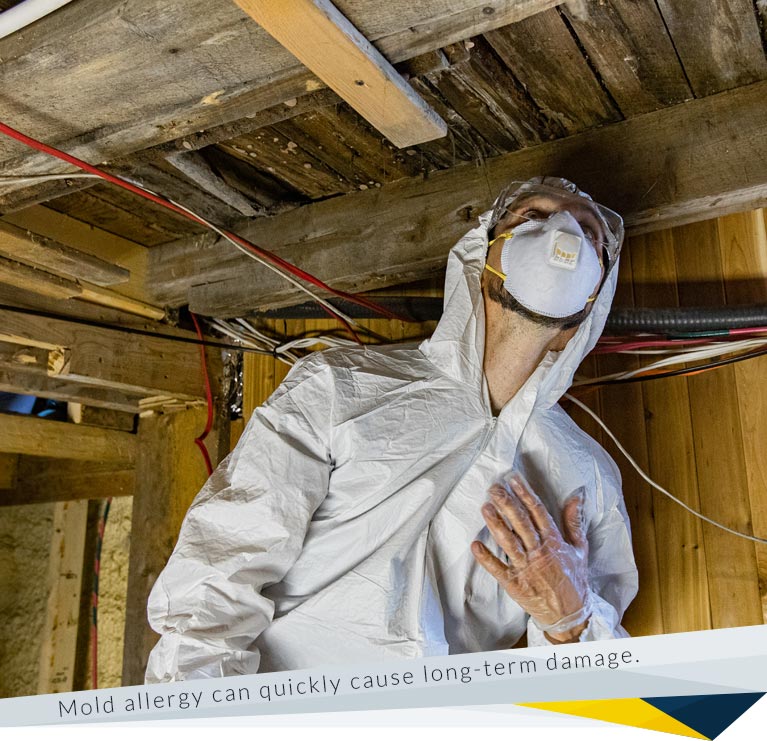
A mold allergy occurs when your immune system overreacts to airborne mold spores. These microscopic particles are released as mold grows and spreads, especially in damp indoor environments. When inhaled, the immune system identifies the spores as allergens, triggering a histamine response that causes inflammation in the nose, sinuses, eyes, throat, and sometimes the lungs. Mold allergy symptoms are persistent and can last year-round, unlike seasonal allergies that are more common during certain times of the year.
Anyone can develop mold sensitivity, but certain groups are more likely to experience severe or long-lasting symptoms.
Even in otherwise healthy adults, repeated exposure has been connected to chronic nasal congestion, sinus pressure, and reduced indoor air quality tolerance over time.
Some people find it helpful to pay attention to how their symptoms behave over time. These observations are not diagnostic tools, but they can help identify patterns that may justify an environmental review.
Consider the following as awareness prompts, not conclusions:
| Symptom | Mold Allergy | Common Cold | Asthma Trigger |
|---|---|---|---|
| Duration | Persistent (Year-round) | 3-10 Days | Variable |
| Sneezing | Common | Common | Rare |
| Fever/Aches | No | Common | No |
| Wheezing | Possible | Possible | Common |
| Itchy Eyes | Common | Rare | Rare |
| Improves Away from Home | Yes | No | No |
Answering yes to these questions does not identify a cause. Instead, it may suggest that environmental factors are commonly evaluated in situations like this.
Most healthy individuals experience mold exposure as an allergic or irritant response. Serious infections are rare.
However, in immunocompromised individuals, certain molds such as Aspergillus species can cause fungal infections like invasive aspergillosis. These cases are medical conditions requiring hospital care and antifungal treatment and are not the same as allergic reactions.
Distinguishing between allergy, irritation, and infection is critical for accurate medical care and responsible environmental decision-making.
Mold allergy symptoms are often manageable, but medical care is important in certain situations.
Seek medical attention if:
A physician can evaluate symptoms, rule out other conditions, and confirm whether allergy testing or asthma management is needed.
One possible indicator of mold-related illness is symptom improvement outside the home. If congestion clears at work, while traveling, or after spending several hours away, the trigger is likely environmental rather than viral. Treating symptoms alone does not remove the source.
Mold needs moisture to grow. If you're experiencing symptoms, consider these common indoor triggers:
Invisible mold is often the most problematic. Hidden growth behind drywall, under flooring, or inside insulation can continuously release spores into the air, even when no visible mold is present. Since these spores are microscopic, exposure often goes unnoticed until symptoms appear in a consistent pattern linked to the home environment.
If mold allergy is suspected or confirmed, reducing exposure to the mold trigger is essential. While medications can treat symptoms, professional mold remediation addresses the cause.
A typical remediation process includes:
This process improves indoor air quality, creating a healthier, more comfortable environment for homeowners.
Some prevention steps can reduce exposure risk, especially after remediation.
Low-quality meters and surface checks often miss hidden moisture. Professional evaluation provides a fuller picture of where moisture is located in the structure.
When indoor exposure is a concern, the most practical step is gathering accurate information about the environment itself. Environmental inspection focuses on identifying moisture, airflow issues, and potential mold sources, not diagnosing health conditions.
At FDP Mold Remediation, we approach these situations by examining the structure, not the symptoms. Our role is to identify conditions that may contribute to indoor air quality concerns and help reduce unnecessary exposure through proper remediation methods.
If you want to better understand what is happening inside your home, you can reach out to us for an inspection. This allows you to make informed decisions, alongside your healthcare provider, based on clear environmental data rather than assumptions.
Common mold allergy symptoms include persistent sneezing, runny or blocked nose, chronic cough, itchy or watery eyes, itchy throat, and dry, irritated skin.
Yes, symptoms can often be managed by controlling humidity, improving ventilation, fixing water damage, and using air purifiers with HEPA filters.
If mold symptoms persist despite home management, or if you find mold growth in hidden areas like behind walls or under floors, it's time to contact a mold remediation specialist for a thorough inspection.
Reducing mold exposure may help reduce long-term health issues such as asthma flare-ups, sinus infections, or worsening allergy symptoms.
Yes, mold often grows in hidden areas such as behind walls, under flooring, or in the attic.
To prevent mold from returning, keep indoor humidity below 50%, ensure proper ventilation in damp areas, repair leaks promptly, and schedule periodic professional inspections to catch hidden moisture early.
Still have questions? Call us at 877-421-2614 to schedule an evaluation and take the first step toward a healthier home.