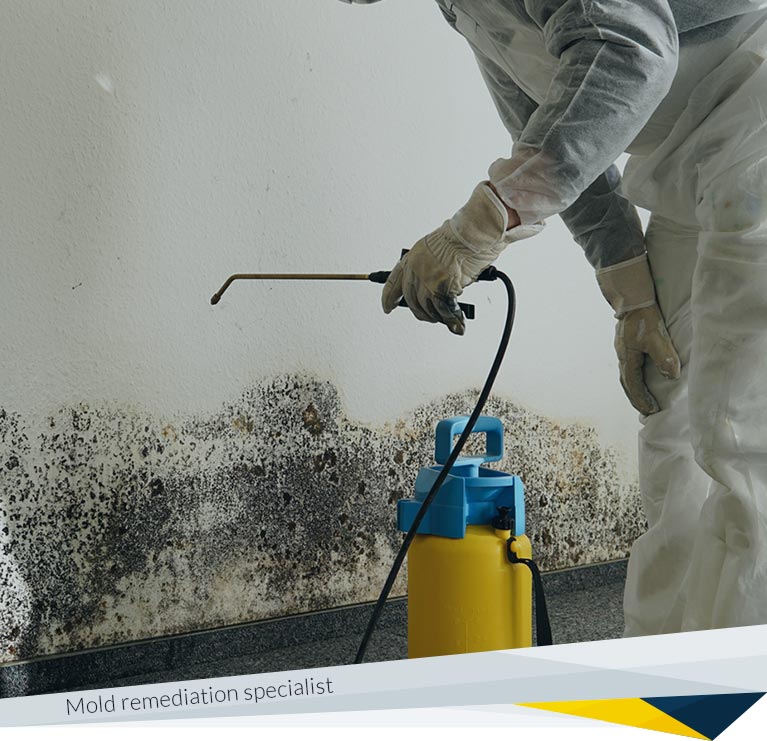
How do I know if I have mold in my home?
Sometimes mold is obvious. Sometimes it is not. You may see dark, green, white, or brown spotting on walls, ceilings, trim, or around windows. You may also notice recurring water stains, peeling paint, soft drywall, warped baseboards, or a musty smell that does not go away. A moldy odor suggests growth should be investigated, even when the source is not easy to see.
In apartments, common problem areas include windows, bathroom walls, closets on exterior walls, AC units, sink cabinets, and areas near shared plumbing. A small visible patch can still point to a larger moisture issue behind the surface, especially when the same area keeps staining or smelling damp.
Mold can also be confused with lookalikes, which is one reason moisture clues matter as much as appearance.
| What you see |
What it might be |
What to do next |
| Dark spots near vents |
Dust, soot, or moisture spotting |
Check filter fit, condensation, and humidity patterns |
| White powder on masonry |
Mineral deposits from moisture movement |
Treat it as a moisture signal and check drainage or seepage |
| Pink film in a shower |
Another kind of biofilm rather than mold |
Improve drying and clean the surface thoroughly |
| Brown ceiling staining |
An old leak mark or an active moisture issue |
Check whether the area is still damp, expanding, or returning |
A useful rule of thumb: color alone is not enough. Moisture history, odor, repeat staining, and the type of material involved usually tell you more than the shade of the spot.
A 30-second decision tree: monitor briefly or act now
Act now if you have:
- An active leak or standing water
- Wet insulation or soft drywall
- Spreading visible growth
- A strong musty odor that keeps returning
- Repeated condensation or staining in the same area
Monitor briefly only if:
- The area is dry now
- The spot is small and isolated
- The moisture source has already been fixed
- There is no ongoing odor
- You are watching to confirm the problem is not returning
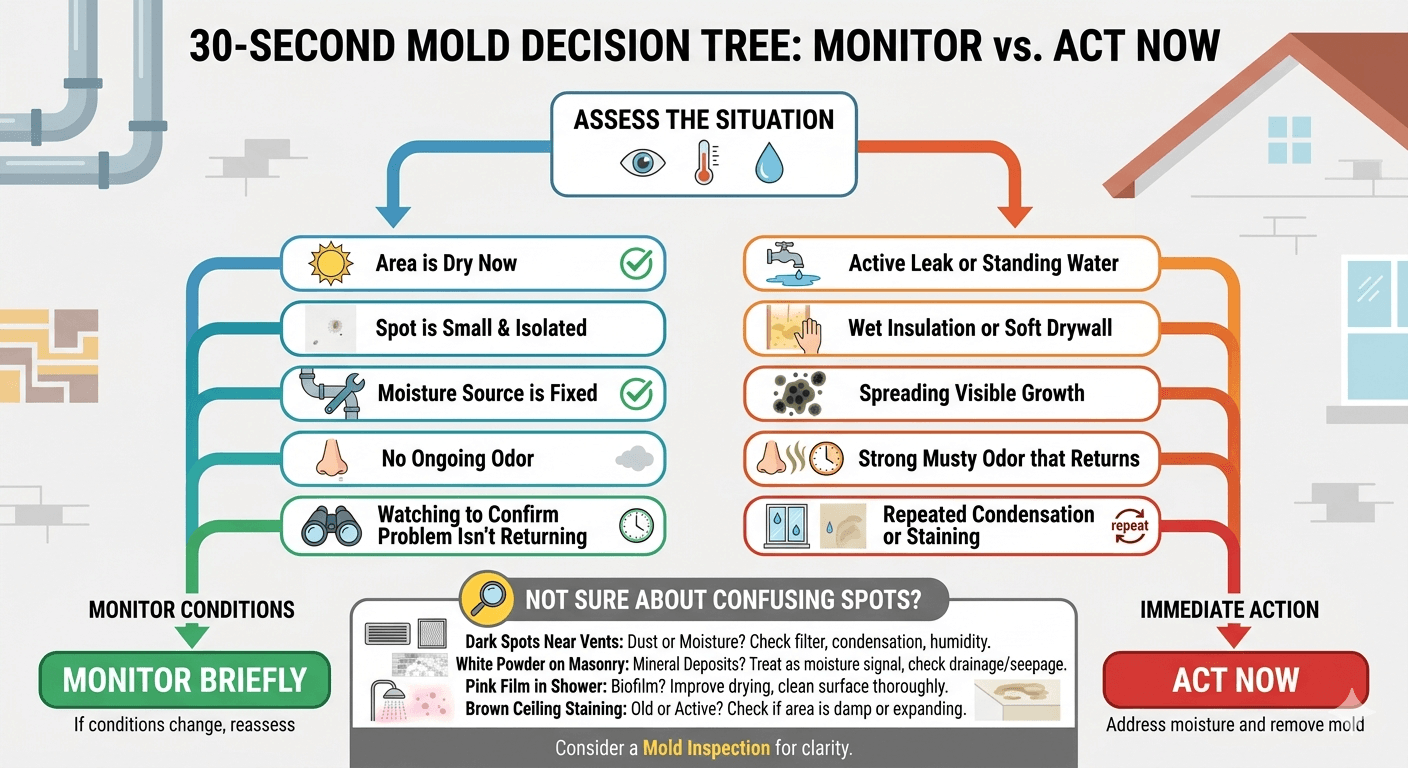
Not sure whether you are looking at harmless staining, a surface issue, or an active moisture problem? A mold inspection can help distinguish what looks straightforward from what may require professional mold removal.