March 2026

Intelligent Yellow Slime Mold: Why This Living Organism Fascinates Scientists, Artists, And Homeowners

When we hear the word "mold", we usually think about the practical household version of the problem - damp drywall, a musty basement, staining near a leak, or the kind of indoor growth that raises questions about cleanup and repair. Slime mold takes that word in a very different direction. Slime molds are not fungi, plants, or animals, but organisms in a separate category commonly described as protists. It is a real living organism, not just a strange curiosity, and it has attracted attention because it can adapt to its environment, form efficient pathways, and behave in ways researchers discuss under the broader idea of non-animal cognition.

At FDP Mold Remediation, we spend most of our time talking about mold in homes and buildings - the kind tied to leaks, damp materials, humidity, and moisture problems that need a practical response. Slime mold still belongs in the conversation because it shows that not every "mold" story is the same. Some growth is a building problem. Some belongs more to biology and ecology. Slime mold sits in that second category, yet it still feels relevant to homeowners because it can show up in and around residential environments when moisture and organic material create the right conditions.


Intelligent Yellow Slime Mold: Why This Living Organism Fascinates Scientists, Artists, And Homeowners

What To Know at a Glance

  • Slime mold is a living organism, but it is not the same as the typical indoor mold we remediate in buildings.
  • Researchers study Physarum polycephalum because it can adapt, form efficient pathways, and show learning-like or decision-making behavior without a brain.
  • Yellow slime mold can appear in and around residential environments, especially where moisture and decaying organic matter are present.
  • Some artists and researchers have translated slime mold's electrical activity into sound, which is why slime mold music projects are more than just a novelty headline.
  • The clearest practical takeaway for homeowners is simple: growth follows conditions, and moisture plays a major role.
Is Mold Affecting Your Health?
Learn More
Send photos of your mold, get a fast estimate
Attach photos of your mold and we'll be in touch shortly with a pricing estimate.

What Slime Mold Actually Is

Although slime mold often gets grouped mentally with fungi, that is not quite right. When we talk about indoor mold in homes, we are usually talking about fungal growth on damp building materials. Slime mold is a different organism altogether.

That distinction matters because you should not confuse an unusual living organism with the kinds of indoor mold problems that can affect drywall, framing, insulation, or other building materials after a leak or moisture issue.

One of the best-known species in this discussion is Physarum polycephalum. It is often described as a huge single cell with thousands of nuclei that behaves like a giant amoeba. During foraging, it produces electrical activity tied to different physiological states. That combination of visible movement, environmental responsiveness, and measurable signaling is a big reason it keeps appearing in discussions about cognition, computation, and music.

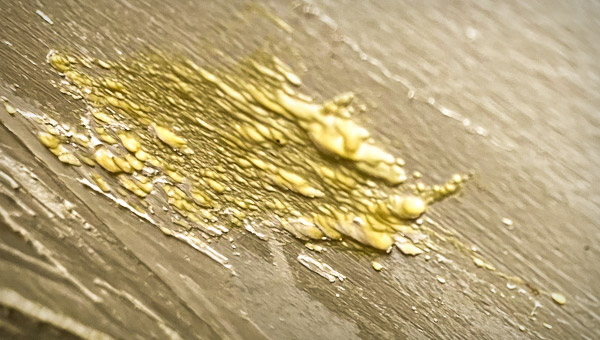
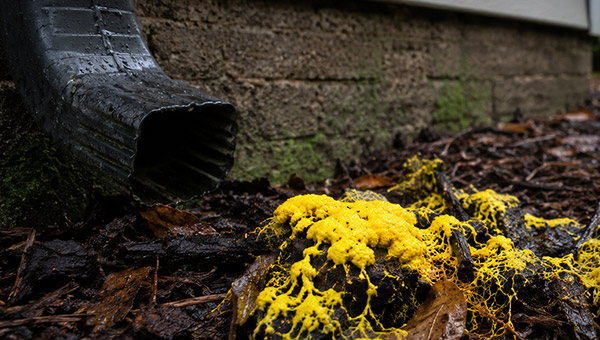
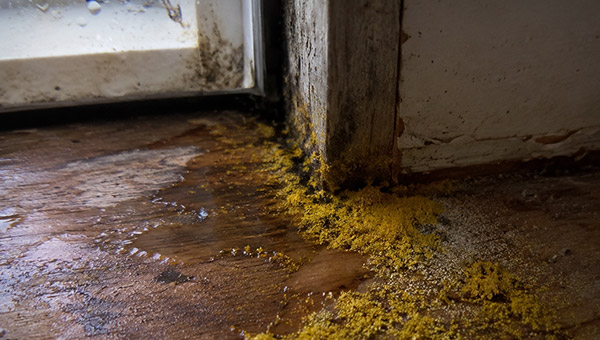
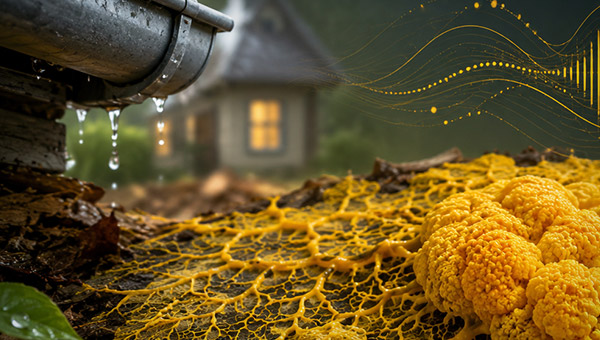
In practical household terms, some people notice yellow slime mold as a yellow or yellowish growth on mulch, decaying wood, leaf litter, damp outdoor surfaces, or other moisture-friendly areas around a home. That does not make it the same as yellow household mold growing on building materials, but it does help explain why homeowners sometimes come across it and want clearer answers.

Intelligent Slime Mold?

When slime mold is described as "intelligent," the word is usually being used in a limited and careful sense. It does not mean intelligence in a human way. It points to surprisingly sophisticated behavior in an organism with no brain or nervous system.

Researchers have studied Physarum polycephalum as a model for non-animal cognition because it shows problem-solving, learning-like responses, and adaptive behavior. That is why the word "intelligent" keeps following it around, even though the more precise meaning is closer to responsive, adaptive, or decision-like behavior.

Learning And Adaptation

Slime mold can change its behavior when conditions change. That is one reason scientists take it seriously.

Researchers have reported habituation in slime molds, which is a simple form of learning in which a response changes after repeated exposure to a harmless stimulus. Other work has discussed adaptive behavior and memory-related processes in slime molds.

The safest way to explain the "intelligent" label is to keep it grounded. Slime mold does not think like a person. It does show real adaptive behavior that surprises people once they look more closely.

Pathway Formation And Decision-Making

Slime mold also attracts attention because it can form efficient pathways and make choices between options.

That is one reason it appears in discussions about distributed intelligence and unconventional computation. Its behavior can look less like random spreading and more like condition-based problem-solving.

The interest is not just that slime mold exists. The interest is that it responds to the world around it in active and measurable ways.

Why It Matters To Homeowners

We do not bring up slime mold because it is the same thing as the indoor fungal mold problems we remediate. We bring it up because it helps explain a bigger point: growth responds to conditions.

Slime mold becomes active where moisture and organic material support it. Household mold problems also follow conditions, even though the biology is different. Indoors, mold growth is strongly connected to moisture, humidity, condensation, leaks, and damp materials.

That household connection shows that slime mold is not just something discussed in research. People may see yellow slime mold in mulch, leaf litter, gutters, or near drainage issues and realize that this is not just a lab curiosity. It is a living, moisture-responsive organism that can appear around the places people live.

That does not turn slime mold into a household remediation issue by default. It does make the story more grounded and easier for homeowners to relate to.

What Slime Mold Can Teach Us About Growth

Slime mold gives us a vivid way to explain how living growth responds to the environment around it. It does not move or spread in a purely random way. It reacts to obstacles, surfaces, food sources, and moisture. That makes it a memorable example of condition-driven behavior in action.

We see the same general principle in buildings, even if the organisms are different. Indoor mold problems usually trace back to moisture intrusion, humidity, condensation, damp materials, or slow drying.

That is why we keep coming back to the same practical lesson in homes: if the conditions remain, the growth pressure remains. The visible growth is often only part of the story. The supporting conditions matter just as much.

Where Slime Mold Music Projects Fit In

The music angle is one of the most memorable parts of the story. Researchers and artists have used slime mold's electrical activity as a source of sound or as part of experimental music systems. In other words, slime mold music projects are not just catchy headlines. They come from real attempts to translate the activity of a living organism into sound.

This gives us a more vivid way to understand slime mold. Instead of seeing it as just a strange biological term, we can see it as an active organism whose measurable behavior has been turned into something people can hear.

That helps explain why slime mold keeps crossing over from biology into art, media, and experimental music. Its behavior is unusual enough to study and dynamic enough to inspire creative work.

What This Does - And Does Not - Mean

We still need to keep the household connection accurate. Slime mold is not the same as the typical indoor fungal growth that affects drywall, framing, insulation, or other building materials after a leak or moisture problem.

That distinction matters because you should not confuse an unusual living organism with the indoor mold problems that may affect a home. The biology is different, even if moisture is part of both stories.

At the same time, slime mold gives us something useful to think about. When we see unusual growth, the first question should not only be "what does it look like?" It should also be "what conditions are supporting it?"

That mindset is valuable whether we are talking about slime mold on mulch or a real indoor mold issue tied to leaks, condensation, or persistent dampness.

Final Thoughts

Intelligent yellow slime mold is more than a strange science topic. It introduces a real living organism that can appear around residential environments, respond to conditions, and behave in ways that researchers study under the umbrella of non-animal cognition. It also helps explain why slime mold music projects exist at all.

For us, the biggest value of the topic is the practical principle underneath it. Slime mold is not the same thing as the indoor mold problems we handle every day at FDP Mold Remediation. It is still a vivid reminder that living growth follows conditions. In and around a home, moisture changes everything.

Frequently Asked Questions

Is Slime Mold The Same As The Mold Found Inside A House?

No. Slime mold is not the same as the typical indoor fungal mold that can grow on drywall, wood, insulation, or other building materials after a leak or moisture problem.

Why Do People Call Slime Mold "Intelligent"?

It refers to the way slime mold can adapt, form efficient pathways, and show behavior that looks surprisingly responsive for an organism with no brain or nervous system.

Can Yellow Slime Mold Appear Around The Home?

Yes. Yellow slime mold can appear in and around residential environments, especially where moisture and decaying organic material are present.

Is Yellow Slime Mold Dangerous To A House?

Yellow slime mold is not the same as the indoor mold problems that damage building materials.

When Should I Be Concerned About Yellow Growth In Or Around My Home?

You should pay closer attention when growth appears near moisture problems, recurring dampness, drainage issues, leaks, condensation, or affected building materials.

««« Back to our blog


Jacob Smith

About Author

Jacob Smith is a mold remediation expert at . He has over twenty years of experience in the field and likes to write about mold when he is not remediating this fungus from someone's home or facility.

Jacob's Facebook Page
About author

Mold Remediation IICRC Certified
Choose fdp mold remediation with confidence
  • IICRC Certified Mold Remediation
  • Rebuild done by licensed contractors
  • Full Service solution, Inspection, Testing, Remediation
  • Clear communication from quote to completion
  • We finish on time and on budget
  • Applied Structural Drying Technician
  • Water Damage Restoration Technician
  • Applied Microbial Remediation Specialist
  • HEPA-Filtration Units
licensed, certified & insured mold remediation specialists
IICRC Certified
EPA Certified