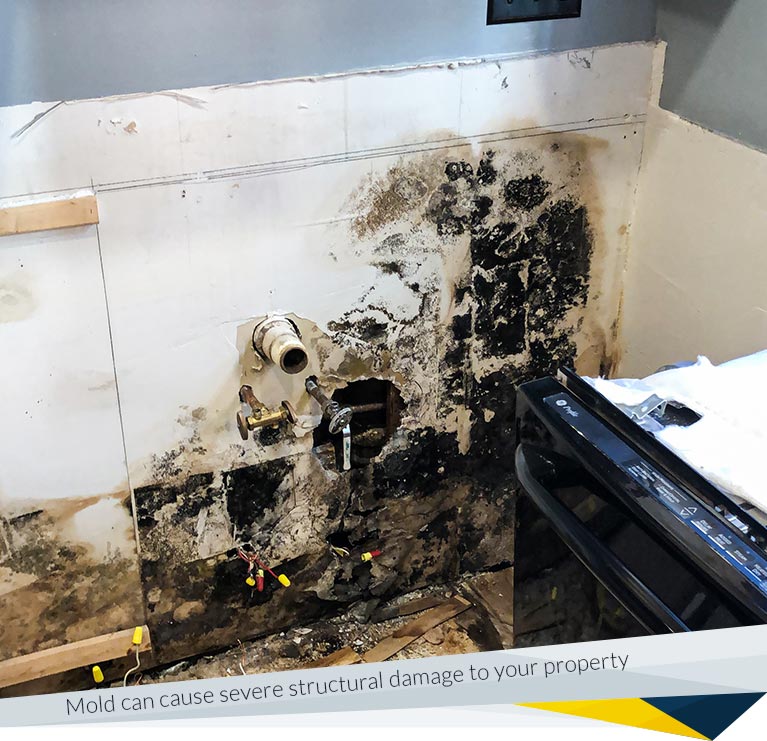
Mold Structural Damage
If you are interested in learning about how mold can cause structural damage to your houses, then you are in the right place. Continue reading down below for details that you need to know about.
Where does mold frequently grow?
Mold frequently grows on building materials, especially during the construction phase, because there is uncontrolled moisture that dampens the material causing condensation, high humidity, or liquid flow.
Here are some examples of materials where mold frequently grows:
- Wood
- Concrete
- Drywall
- Paper
What parts of the house are susceptible to mold?
Technically, mold can grow almost anywhere. However, it can be frequently found where there is a nearby source of moisture. Examples of these places are the bathrooms, kitchen, and ceiling, in the case of a roof leak.
In bathrooms, mold can grow on the ceiling, floors, walls, and even toilets and bathtubs. This is because there is a high presence of heat and moisture in the space, which creates a very humid environment that is a perfect for breeding mold.
Kitchens with faulty plumbing, poor insulation, and inadequate waterproofing and ventilation are also prone to mold growth because of moisture and humidity. Even newly built kitchens are susceptible to mold growth when the right conditions are met.
Just like the bathroom and kitchen, your ceiling is also a common place where mold typically grows, especially when you live in an area with plenty of rainy days. If your roofs are not well-built, the moisture can seep into the structure from above and cause mold growth.
How serious is the damage caused by mold?
Mold can cause serious damage. First and foremost, it looks disgusting, so it will damage the aesthetic of your home, as well as causing your space to look untidy and uncared for. Second, as it grows on walls, ceilings, concrete, and foundations, it will slowly rot the material until the material decays.
Can mold destroy a house?
Absolutely! Mold can eventually cause a house to crumble to pieces when it grows on the home's integral structural components. It eats away the material such as insulation, carpeting, and paper backing and breaks it down into organic matter. However, prompt attention to mold when you notice it growing can prevent such serious damage.