Black Mold Poisoning: Possible Symptoms and What to Do Next
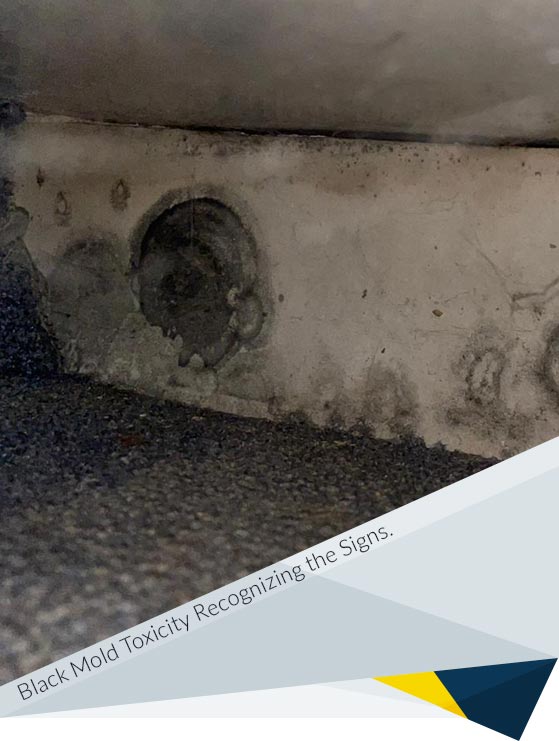
The phrase "black mold poisoning" is common online, but it can blur two separate questions: what may be affecting a person's health and what is happening inside the building. Finding dark mold-like growth at home does not prove that mold is causing symptoms, and its color does not identify the species.
If you have new, persistent, or worsening symptoms, speak with a licensed healthcare professional. From the building side, the useful questions are different: Where is the moisture coming from? How much material is affected? Is the growth limited to a cleanable surface, or does it involve porous or concealed materials?
What Does "Black Mold Poisoning" Actually Mean?
"Black mold" is a common description, not a precise identification. People sometimes use it to refer to Stachybotrys chartarum, a greenish-black mold associated with persistently damp, cellulose-containing materials such as drywall paper and fiberboard. Many other molds can also appear dark.
The phrase "black mold poisoning" is not a standardized medical diagnosis. CDC/NIOSH distinguishes molds that can produce mycotoxins from the idea that the molds themselves are "poisonous." Symptoms alone cannot tell you which mold is present, how extensive the building problem is, or whether mold is the cause of a health complaint.
We have also published a case study discussing stachybotryotoxicosis, including the term's connection with Stachybotrys chartarum and a customer case involving mold remediation.
What Symptoms Can Be Associated With Indoor Mold Exposure
Indoor mold exposure is more commonly associated with allergy-type or irritation symptoms than with a distinct "poisoning" syndrome. Reported effects can include a stuffy or runny nose, sore throat, coughing or wheezing, irritated eyes, and skin rash. Mold can also aggravate asthma in some people. People with weakened immune systems or chronic lung disease may have additional risks.
These symptoms are not specific to mold. The same complaints can have many causes, so a symptom list should not be used as a diagnosis.
If symptoms are severe, breathing becomes difficult, or you are concerned about a vulnerable person in the home, seek medical advice promptly. FDP Mold Remediation does not diagnose or treat health conditions.
What Should You Do If You Are Worried About Black Mold Exposure?
Use two tracks at the same time: address the health concern appropriately and investigate the building condition.
| What You Know | What It Does Not Tell You | Practical Next Step |
|---|---|---|
| Someone has symptoms, but no mold has been confirmed | What is causing the symptoms | Speak with a healthcare professional and check for dampness, leaks, odors, or visible growth |
| Dark growth is visible on a small surface | The mold species or hidden extent | Correct the moisture source and determine whether the material can be cleaned safely |
| Growth keeps returning after cleaning | Whether moisture or affected material remains | Investigate the moisture source and nearby materials |
| Water-damaged drywall or insulation is affected | How far the condition extends | Determine the affected area before deciding the remediation scope |
| Growth or odor appears connected to HVAC or a concealed area | What is happening inside the inaccessible space | Seek a qualified building evaluation before disturbing materials |
| A specific mold type must be identified for a defined reason | Species cannot be confirmed by color | Consider sampling if the result will change a decision |
A doctor evaluates the person. A building professional evaluates moisture, materials, visible growth, and the likely extent of the condition.
Can You Identify Black Mold by Appearance or Smell?
No. Dark green, brown, or black growth may deserve investigation, but appearance alone cannot confirm Stachybotrys chartarum or another species. A musty odor can point toward damp materials or microbial growth, but it does not identify a particular mold.
Instead of judging the problem by color, look at the pattern around it. Is the area still damp? Did it appear after a leak or flood? Does it keep returning? Is drywall soft, paint bubbling, or material deteriorating? Does the odor become stronger after rain, plumbing use, or HVAC operation?
What Changes the Decision From Cleaning to Further Investigation?
There is a difference between seeing a small patch and knowing the affected area is small.
A few dark spots on bathroom grout after repeated condensation are different from growth on water-damaged drywall after a plumbing leak. The first may remain a surface-cleaning and moisture-control issue if the material is sound and the growth does not return. The second raises questions about the back of the drywall, insulation, framing, and how far the water traveled.
From a remediation standpoint, color rarely determines the scope. More useful factors are:
- whether the moisture source is active or corrected
- whether growth returns after cleaning
- whether porous materials are affected
- whether materials are soft, swollen, stained, or deteriorated
- whether damage may extend into concealed areas
- whether the problem followed significant water intrusion
- whether an HVAC pathway or connected cavity may be involved
If a one-time moisture source has been corrected, the material is dry and sound, and there is no recurring odor, staining, or evidence of concealed damage, professional remediation may not be necessary.
Inspection, Testing, Cleaning, and Remediation Are Not the Same Thing
A professional mold inspection looks at building conditions. It may include visible observations, moisture readings, the history of leaks or flooding, and other clues that help define the affected area.
Mold testing means collecting a sample for laboratory analysis. It can be useful when a specific question requires sample-based information, but it is not automatically necessary because the growth looks black. EPA guidance notes that sampling is generally unnecessary when visible mold is already present and the need for cleanup is clear.
Cleaning is appropriate only when the affected material and conditions support it. Hard, nonporous or semi-porous surfaces may sometimes be cleanable. Porous materials that are deteriorated or affected below the surface may need removal.
Mold remediation is the controlled process used when the affected materials, extent, location, or conditions call for more than routine surface cleaning.
What Does Moisture Have to Do With "Black Mold"?
Moisture is the part of the problem homeowners can act on regardless of mold color or species. Plumbing leaks, roof problems, condensation, appliance leaks, high humidity, and flooding can leave materials damp enough to support growth.
EPA guidance emphasizes drying wet materials quickly, ideally within 24-48 hours, as a prevention step. That is different from saying mold always starts growing at a fixed point within that window.
Fix the moisture source before closing walls, replacing drywall, or treating the job as complete. Plumbing, roofing, HVAC, drainage, or exterior-envelope repairs may need the appropriate trade.
When DIY Cleaning May Be Reasonable
A small amount of surface growth on a cleanable material may sometimes be handled by a homeowner after the moisture source is corrected and appropriate cleanup precautions are followed.
DIY cleaning becomes a poorer fit when:
- growth is recurring or widespread
- drywall, insulation, carpet padding, or other porous materials are affected
- material is damaged or deteriorated
- the source was significant flooding or a long-term leak
- mold is suspected in a wall, ceiling, floor assembly, or HVAC component
- cleanup requires opening or removing building materials
The decision should be based on the condition and scope, not on the word "black."
How Professional Mold Remediation Addresses the Building Problem
When remediation is appropriate, the goal is to remove affected material or growth in a controlled way and correct the conditions that allowed it to develop.
A project may include:
- Inspection and moisture assessment
- Containment where needed
- Removal of damaged porous materials
- Cleaning and HEPA vacuuming of remaining surfaces
- Drying and moisture control
- Detailed final cleaning
FDP Mold Remediation follows the ANSI/IICRC S520 standard for professional mold removal. The work plan should reflect the actual materials, access, moisture conditions, and extent found at the property rather than the color of the mold alone.
How to Reduce the Chance of Mold Returning
Repair leaks promptly, use bathroom and kitchen exhaust systems correctly, keep HVAC condensate drainage working, and check areas that have had previous moisture problems. After a repair, revisit the area when watery conditions recur, such as heavy rain, shower use, or operation of a nearby fixture.
If mold returns, do not assume another round of surface cleaning will solve it. Recurrence is a reason to look again at moisture and affected materials.
When to Contact FDP Mold Remediation
If dark mold-like growth keeps returning, porous materials are damaged, or you are unsure how far a moisture problem extends, FDP Mold Remediation can evaluate the building conditions and help determine whether professional remediation is appropriate.
If you have questions about preventing mold from returning or want to schedule an inspection, contact FDP Mold Remediation at 877-421-2614 or contact us online.
If your main concern is how you or someone in the household feels, speak with a healthcare professional. The building assessment and the medical assessment serve different purposes.
Frequently Asked Questions
Is "Black Mold Poisoning" a Medical Diagnosis?
The phrase is widely used online, but it is not a standardized diagnosis that can be confirmed from a symptom list or by seeing dark mold in a building. A healthcare professional should evaluate health concerns. Building professionals can investigate the environmental conditions.
Is Black Mold More Dangerous Than Other Molds?
Color alone does not establish how a mold will affect a person or determine the cleanup scope. CDC/NIOSH advises that molds capable of producing mycotoxins, including Stachybotrys chartarum, should be treated like other indoor molds in terms of addressing growth and moisture.
Can Symptoms Tell Me if Mold Is Causing My Health Problem?
No. Symptoms such as coughing, nasal irritation, wheezing, itchy eyes, or skin irritation can have many causes. A healthcare professional should evaluate the symptoms and medical history.
Do I Need to Know Which Species of Mold Is Present?
Not always. If visible growth and moisture damage already show that cleanup is needed, identifying the species may not change the building decision. Testing is more useful when the result will answer a specific question or change what happens next.
When Should I Have the Building Professionally Evaluated?
Professional evaluation becomes more useful when growth is recurring, porous materials are affected, the source or extent is unclear, water damage may have reached hidden areas, or the condition involves an HVAC component or another difficult-to-access space.